Kyrgyzstan
Kyrgyz… what?
Welcome to Kyrgyzstan, a little-known gem of Central Asia where mountains seem to touch the sky and where freedom is a way of life. Here, it’s called the “land of forty tribes,” in reference to the epic of the national hero Manas. But the key word of Kyrgyzstan is above all nature. Pure. Majestic. Infinite.
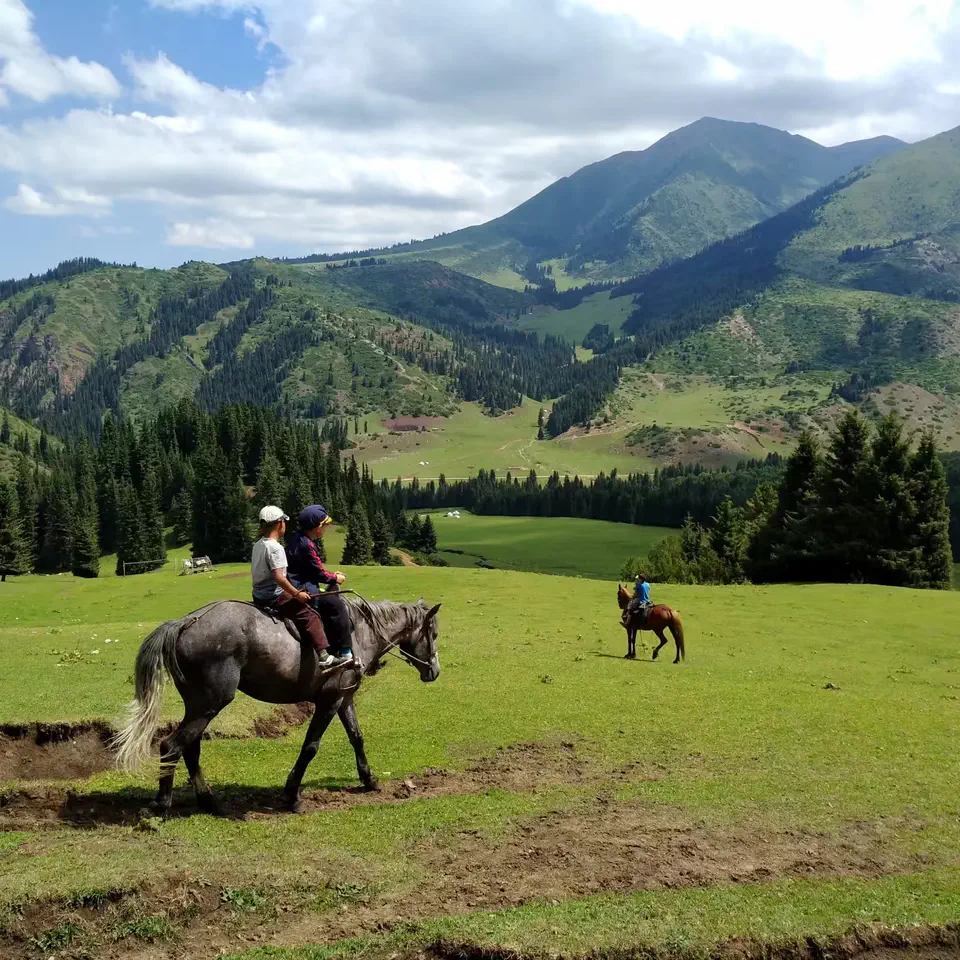
Imagine a country where more than 90% of the territory is mountainous, crossed by the foothills of the Tian Shan, those “celestial mountains” that have nothing to envy of the Himalayas. Deep valleys carpeted with wild flowers, high desert plateaus, turquoise lakes at 3000 meters altitude, crystal-clear rivers, centuries-old fir forests, isolated yurts in the middle of nowhere, and free-roaming horses as your only companions. Welcome to the land of nomads, where people move on horseback, drink fermented mare’s milk, and live to the rhythm of the wind.
Whether you’re an adventurer at heart, hiking enthusiast, horseback riding passionate, immersive travel lover, or all of the above, Kyrgyzstan will fulfill you. Trekking in the Karakol valleys, horseback journeys to the pastures of Song Kul Lake, bivouacs under the stars at 3500m altitude, glacier crossings or ski touring descents… here, every journey is an adventure.
Kyrgyzstan is also a rich and vibrant culture, passed down from generation to generation. The art of eagle hunting, colorful embroidery and felts, guttural music and epic dances, legendary hospitality of nomadic families ready to welcome you in their yurt… you’ll feel a rare, sincere, unforgettable human warmth. The yurt here is not just a dwelling: it’s a work of art, a symbol of identity, a 360° refuge on the beauty of the world.
And the iconic sites? Let’s mention the pastures of Song Kul Lake, a veritable celestial sea bordered by steppes; the mythical Issyk Kul Lake, “warm lake” encircled by snowy peaks; the Jeti Oguz gorges and their red cliffs; the Sary Chelek nature reserve or the remote villages of the Suusamyr valley. And for the most curious, traces of the Silk Road are still visible at Tash Rabat, a stone caravanserai lost in the depths of the mountains.
If you dream of a journey where immersion takes priority over comfort, where we trade wifi for campfires, where encounters matter more than kilometers, and where you breathe deeply in breathtaking landscapes… then Kyrgyzstan is for you. Contact us and let’s set off together on the trail of the last nomads of Central Asia. Kyrgyzstan is not a destination. It’s a revelation!
Essential Information
Practical Notebook
Flights
There are no direct flights between France and Kyrgyzstan at the moment. Airlines such as Turkish Airlines, Pegasus (via Istanbul), FlyDubai, Emirates, or Qatar Airways offer regular flights with one stopover to Bishkek (the capital) or Osh (in the south of the country). It’s also possible to arrive from Kazakhstan by crossing the border towards Almaty (at Kordai / Ak Zhol): the crossing is easy and the border post is open 24/7.
Time Difference
You need to add +4 hours in summer and +5 hours in winter compared to Paris time.
Currency and Exchange
The local currency is the Kyrgyz som (KGS). €1 equals approximately 95 to 100 soms (the rate varies regularly). It’s very easy to exchange money in major cities like Bishkek, Karakol, or Osh: banks, official exchange offices, and sometimes at the hotel. The US dollar is also very common on site. The use of bank cards is developing, but remains limited outside major cities. It’s therefore advisable to always have cash, especially in rural areas or in the mountains.
Banks and ATMs
Visa and MasterCard cards work well in most ATMs in major cities. Contactless payment exists but remains uncommon. Outside Bishkek and tourist cities, withdrawals and electronic payments can be complicated. It’s therefore recommended to anticipate your withdrawals and travel with small bills in cash.
SIM Cards and Internet
Buying a local SIM card is simple, inexpensive, and very practical for staying connected. You just need to present your passport in an operator shop (Beeline, O!, MegaCom, etc.). Prepaid plans include calls, SMS, and data at very affordable rates (e.g.: €5 to €10 for several GB of data). 4G covers cities and main roads well, but in mountainous or remote areas, the signal can be weak or even non-existent.
International Dialing Code
To call Kyrgyzstan from France, dial +996 followed by the local number. To call France from Kyrgyzstan: +33 followed by the number without the initial 0.
Electricity and Outlets
Kyrgyzstan uses the same outlets as France (types C and F, 220V / 50Hz). No adapter is necessary for French travelers. Remember to bring a power strip or external battery if you’re going several days without access to electricity (especially in a yurt or tent).
⬆️ Back to Menu ⬆️ Back to Menu
Country Profile
Climate
Kyrgyzstan, a predominantly mountainous country, offers climatic diversity marked by altitude. The lower regions and valleys experience a continental climate, with hot, dry summers (20-30°C) and cold winters (-10 to -20°C). Higher altitude areas, like the Tian Shan, experience lower temperatures, with persistent snow in winter and cool summers (10-20°C). Issyk Kul Lake benefits from a milder microclimate thanks to its altitude and location surrounded by mountains. The best time to visit depends on activities: spring and autumn for flowering valleys, summer for high mountain hikes, winter for skiing.
Ethnic Groups
Kyrgyzstan has about 6.5 million inhabitants, with a majority of Kyrgyz (about 73%), followed by Uzbeks (14%), Russians (6%), and other minorities such as Tatars, Ukrainians, and Germans. The Kyrgyz are descended from Turco-Mongol nomadic tribes, and the country celebrates its ethnic diversity, particularly during cultural festivals.
Religions
Kyrgyzstan is predominantly Sunni Muslim (about 80% of the population), with a tolerant and moderate tradition. Islam is influenced by nomadic customs and doesn’t require a strict dress code for visitors. There’s also an Orthodox Christian community (about 10%), mainly composed of Russians and Ukrainians.
Gastronomy
Kyrgyz cuisine is simple, hearty, and influenced by nomadic life, emphasizing meat, dairy products, and pasta. Among the emblematic dishes:
Main dishes: Laghman: long hand-pulled noodles, often stir-fried with vegetables and meat (lamb or beef), sometimes spicy.
Plov: pilaf rice mixed with meat (lamb), carrots, onions, and spices.
Beshbarmak: national dish, consisting of boiled meat (lamb or horse) served on pasta.
Achichuk: lamb liver sausages.
Beverages: Kumis: fermented mare’s milk, traditional drink of nomads.
Kompot: dried fruit drink.
Note on vegetarianism: Vegetarian options are limited, especially in rural areas, but major cities like Bishkek offer meatless options.
Customs and Traditions
Hospitality: As throughout Central Asia, hospitality is sacred. Guests are warmly welcomed, often with tea and food.
Yurts: Enter by putting your right foot first. Yurts are sacred places, symbols of nomadic life.
Toasts: During meals, toasts are important, and everyone may be invited to make one.
Religious sites: Remove shoes in mosques, cover head for women.
⬆️ Back to Menu ⬆️ Back to Menu
Health
Health
Vaccinations
No particular vaccine is required to enter Kyrgyzstan. However, it’s recommended to be up to date on universal vaccines such as DT-Polio, hepatitis A and B, and typhoid if you plan to eat at local establishments.
Insects
Bring mosquito repellent, especially in summer near lakes. In the mountains, protect yourself from ticks with covering clothing.
Healthcare Access
Bishkek has modern clinics with English-speaking staff. In rural areas, care is more limited. Travel insurance and a first aid kit are recommended.
Drinking Water
Tap water is not potable. Use bottled water or a filter.
⬆️ Back to Menu ⬆️ Back to Menu
Safety
Kyrgyzstan is a safe country for travelers, with legendary hospitality. Risks are low, but as everywhere, stay vigilant in major cities and avoid isolated areas at night. If you are a French citizen, register on Fil d’Ariane for alerts. Most countries offer similar systems.