Nomadistan invites you on an enchanting odyssey through Uzbekistan, along the legendary Silk Road. Our circuit will transport you from Khiva to Tashkent across the mythical Kyzylkum Desert, passing through Bukhara and Samarkand.
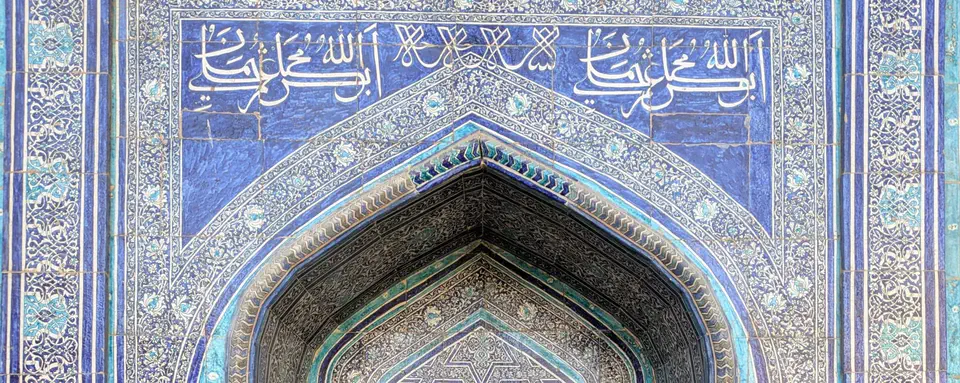
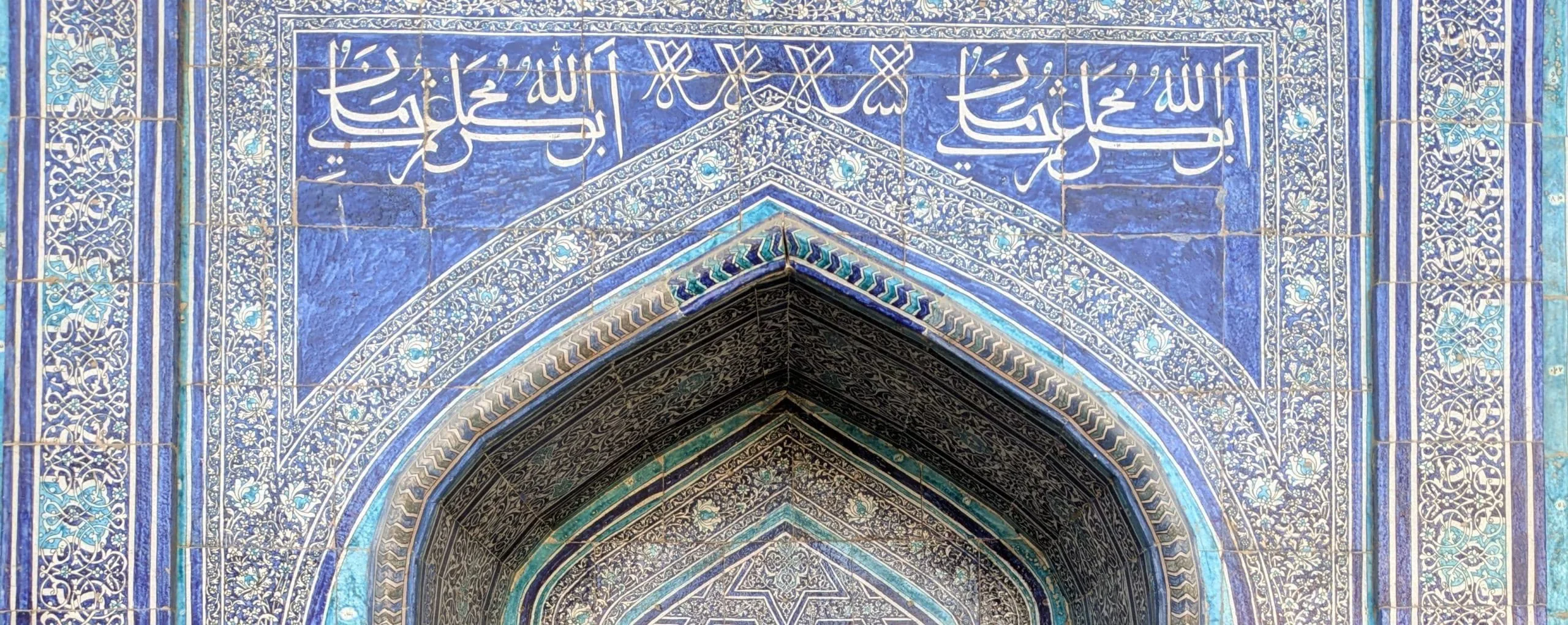
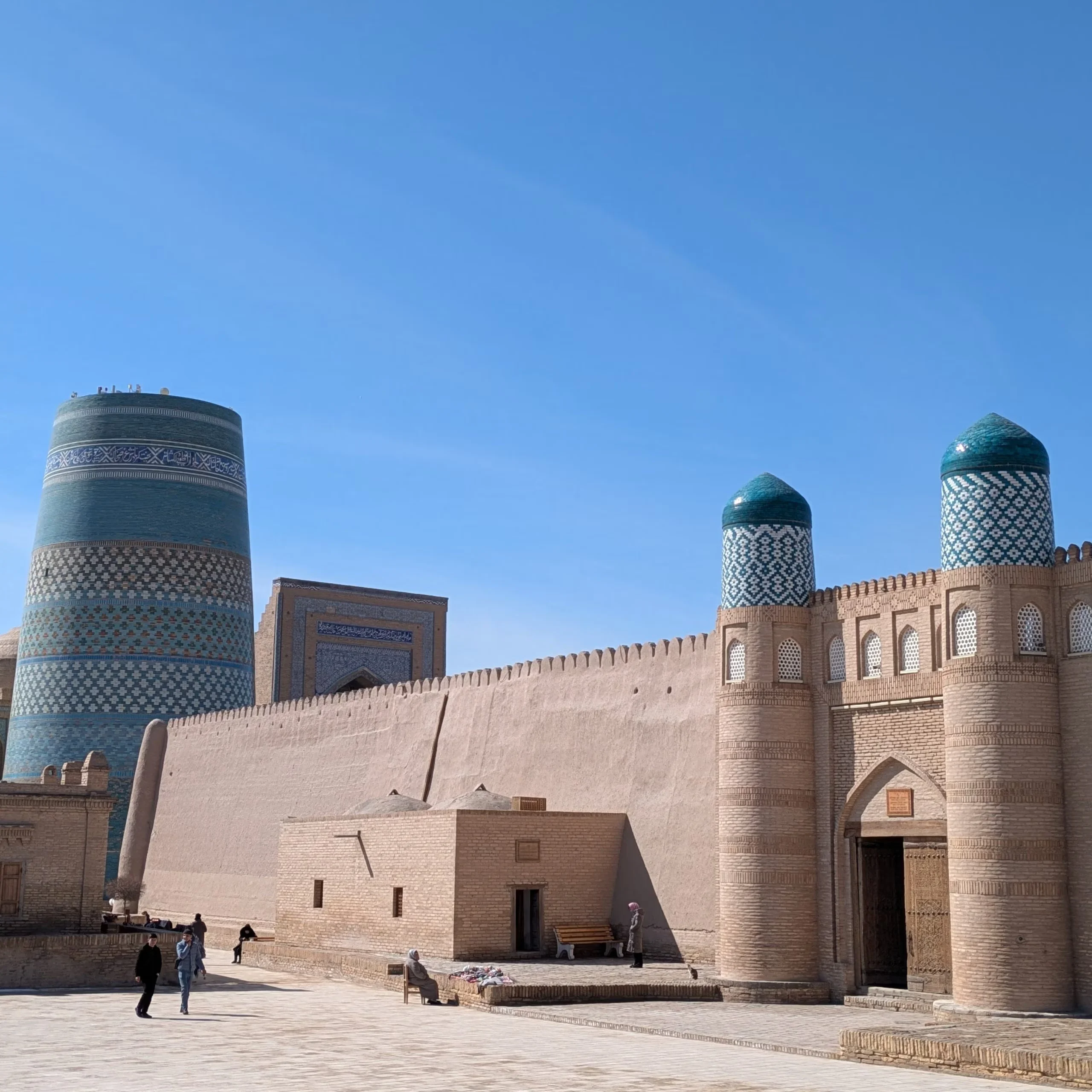
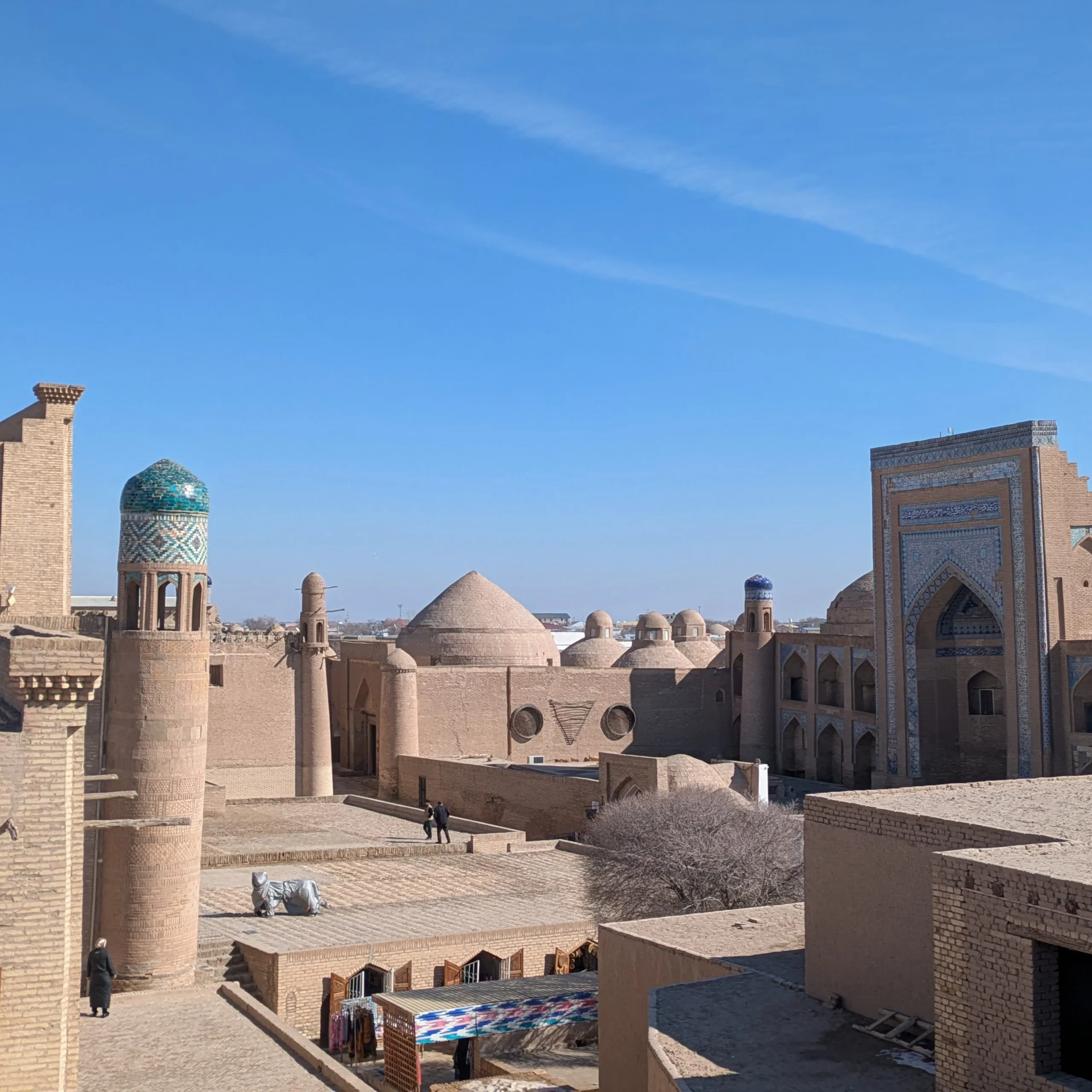
In Khiva, let yourself be captivated by the atmosphere of Itchan Kala, the fortified old town listed as a UNESCO World Heritage site, a true open-air museum, whose narrow alleys intertwine among mosques, madrasas, and palaces adorned with colorful mosaics and majolica.
Bukhara, an oasis over 2,000 years old, will seduce you with its preserved historic center. Stroll through the lively bazaars where echoes of caravans of yesteryear still resound.
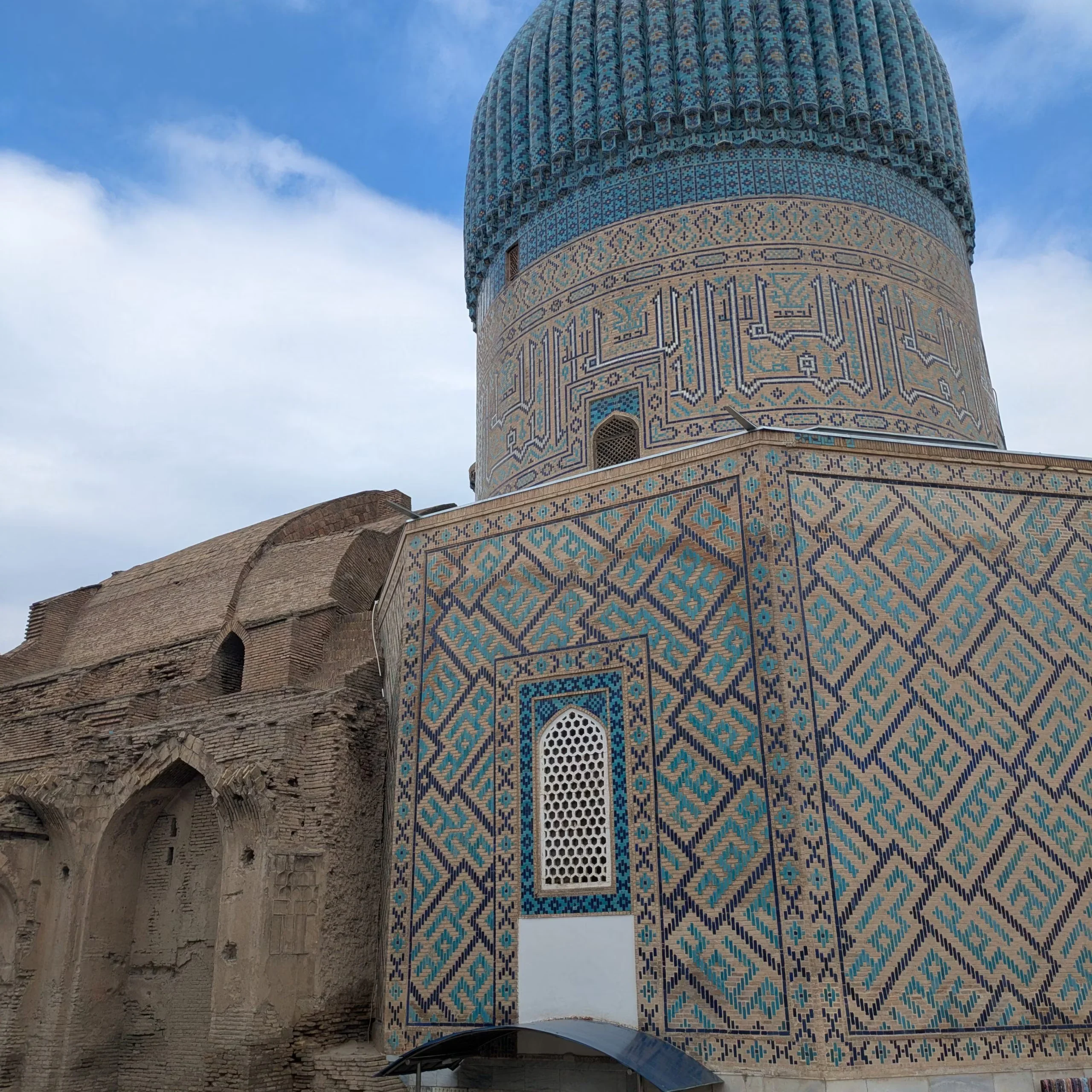
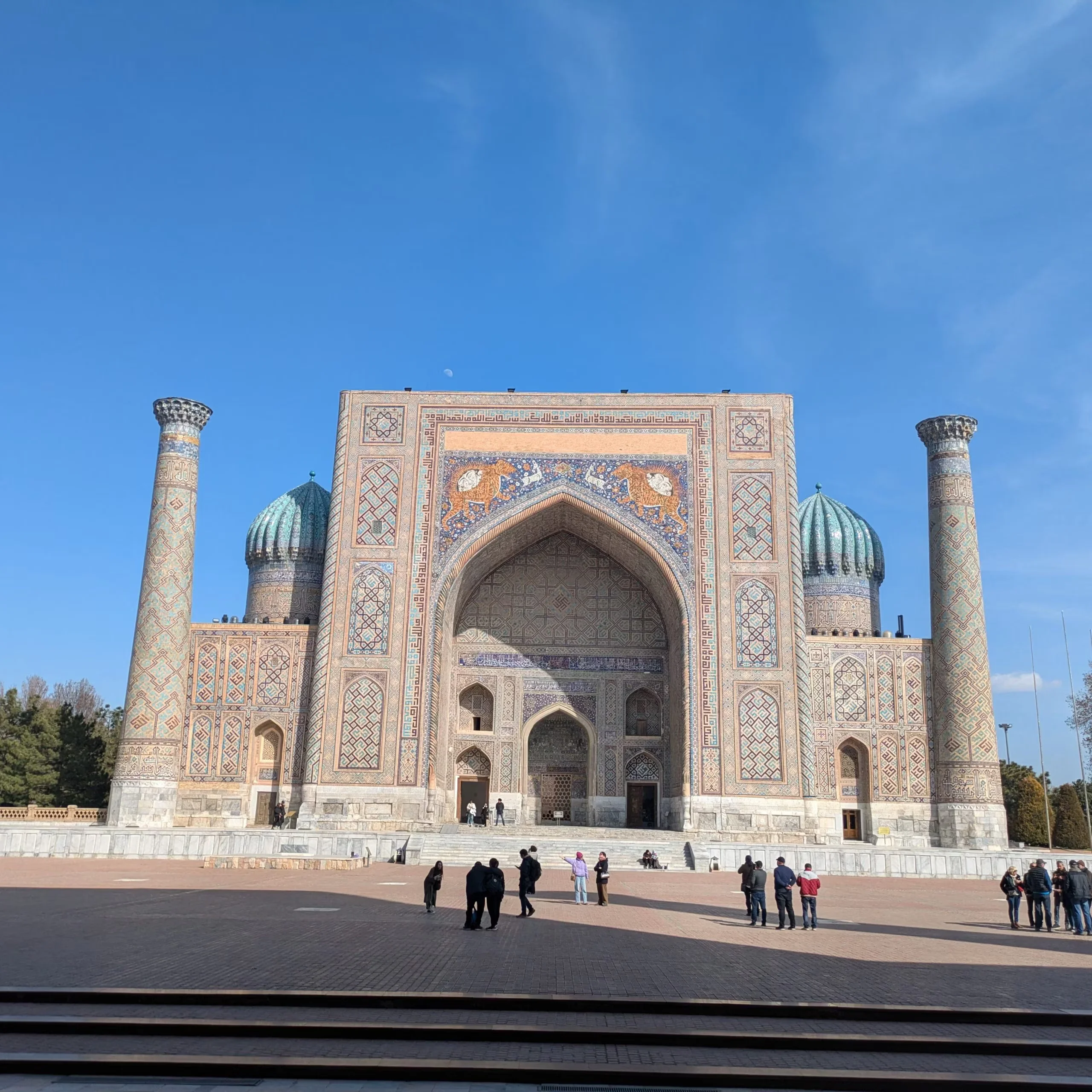
Samarkand, a crossroads of cultures, will amaze you with the splendor of Registan Square, surrounded by madrasas with turquoise domes and dazzling mosaics.
This circuit promises you a rich exploration combining historical heritage, architectural wonders, and natural beauty, for a memorable experience in the heart of Central Asia.
Tour images
Detailed Itinerary
- 01
DAY 1: Welcome to Uzbekistan!
Welcome to Uzbekistan! Upon your arrival at Urgench airport, near Khiva, our team warmly welcomes you to this land that continues to inspire so many travelers. We head to your hotel, where you can relax and soak in the very special atmosphere of beautiful Khiva.
- 02
DAY 2: Khiva, discovering Itchan Kala
Today we set out to discover enchanting Khiva, a thousand-year-old oasis where time seems suspended. Founded over 2,500 years ago, it was an essential stop for Silk Road caravans, offering travelers a haven of peace before crossing the vast desert expanses. Today, Khiva is distinguished by its historic center, Itchan Kala, a fortified inner city listed as a UNESCO World Heritage site, which houses more than 50 historical monuments and 250 old houses dating mainly from the 18th and 19th centuries.
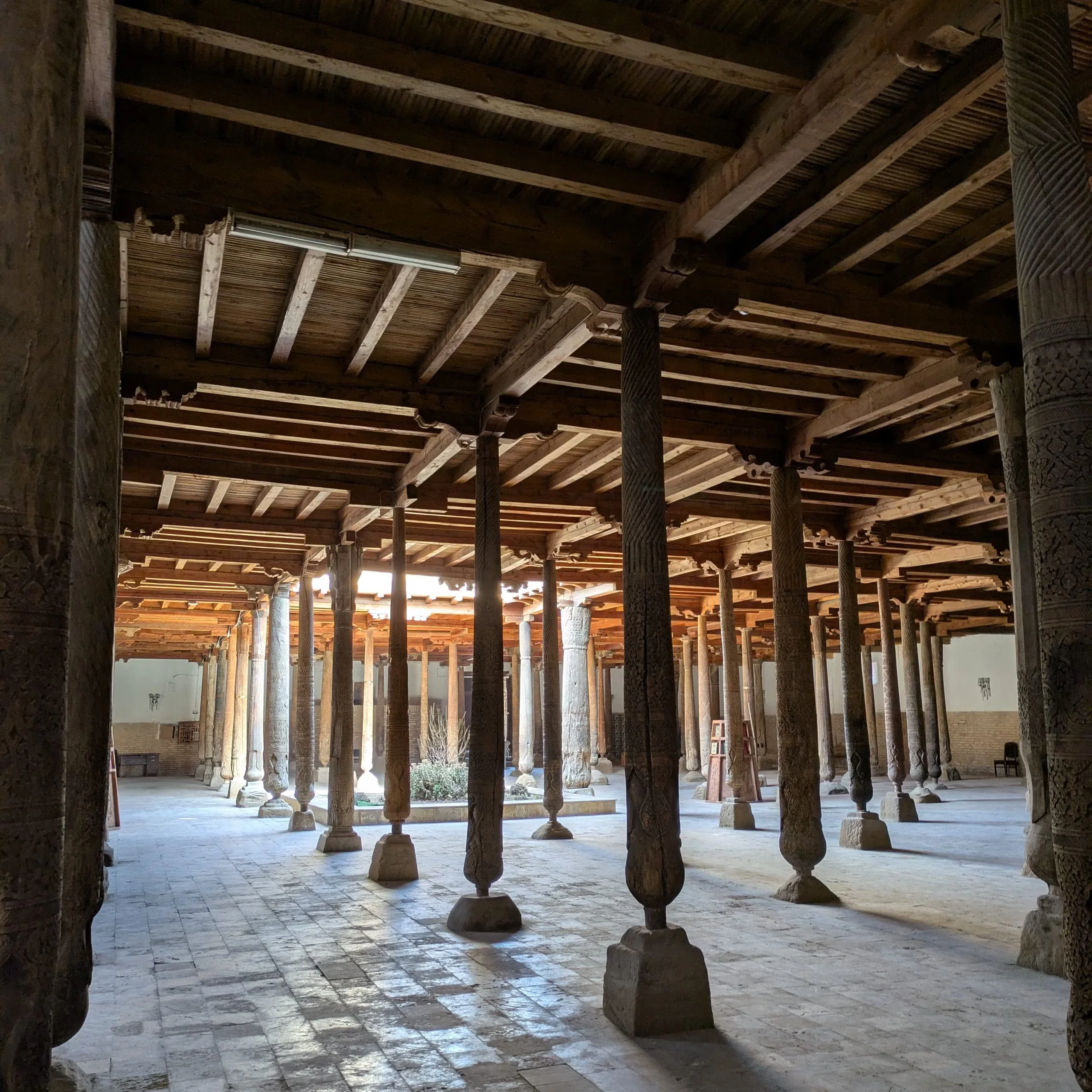
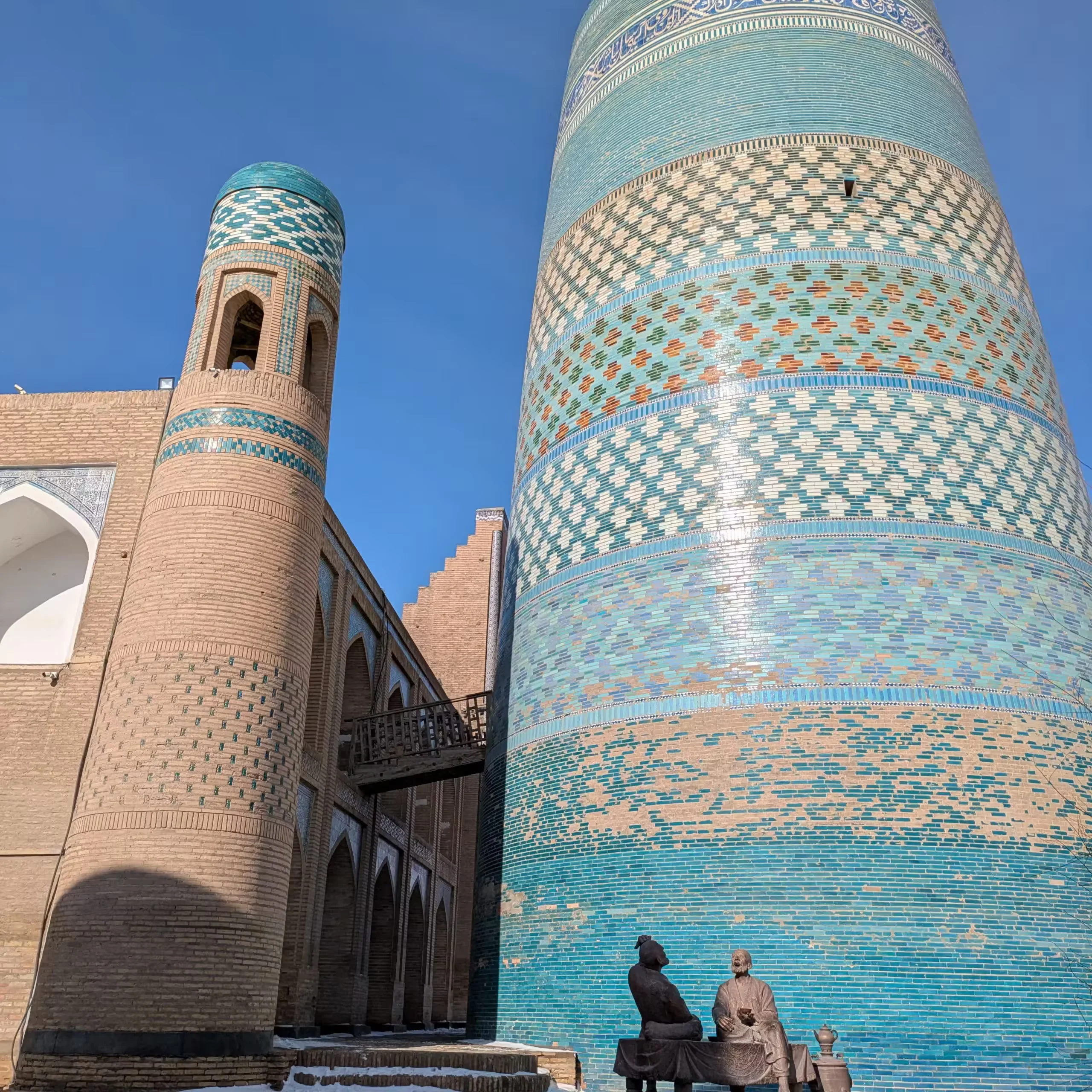
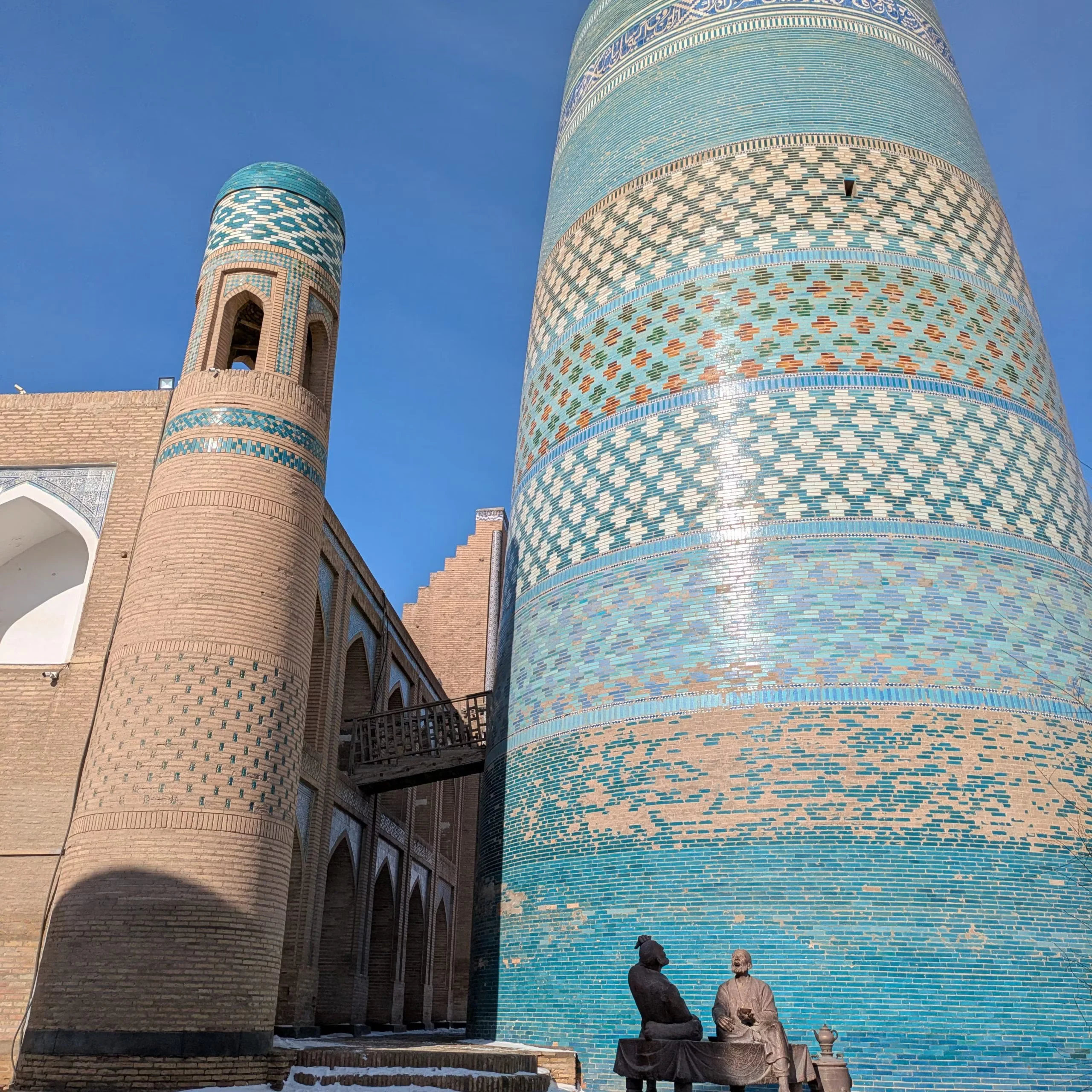
Upon entering Itchan Kala, visitors are immediately captivated by the Kalta Minor minaret, recognizable by its truncated silhouette and dazzling mosaics. Commissioned in 1851 by Khan Muhammad Amin, this minaret was meant to be the tallest in Central Asia, but its construction was interrupted upon the khan's death, giving it this singular appearance. Not far away, the Juma Mosque (Friday Mosque), built in the 10th century then rebuilt in 1788, offers a mystical atmosphere with its vast prayer hall supported by 212 carved wooden columns, each telling a story through its unique motifs.
Strolling through Khiva's paved alleys also means discovering artisans perpetuating ancestral know-how. Wood carving, ceramics, and the making of silk carpets and puppets are all living traditions that give the city an authentic soul.
In addition to this day:
- Tightrope walking show
- Traditional puppet show - 03
DAY 3: Crossing the mythical Kyzylkum Desert to Bukhara
We bid farewell to Khiva, and set out in the footsteps of caravaneers of yesteryear, to conquer the Kyzylkum Desert, heading toward Bukhara. Our 450-kilometer journey will take about six to seven hours.
Majestically extending between Khiva and Bukhara, the Kyzylkoum Desert, literally "red sands" in Uzbek, reveals a mesmerizing landscape of undulating dunes and infinite steppes. With an area of approximately 298,000 km², it ranks among the largest deserts on the planet.
Historically, the Kyzylkoum has witnessed illustrious passages. Figures such as Alexander the Great, Genghis Khan, and Marco Polo crossed these arid expanses, following the caravan routes of the legendary Silk Road that connected Samarkand, Bukhara, and Khiva.
Despite its aridity, the desert harbors unsuspected treasures. Lake Aydarkul, a vast expanse of salt water accidentally created in the 1970s, offers a refreshing oasis in the midst of the dunes. This body of water has become a refuge for many bird species, delighting ornithologists and travelers seeking tranquility.
- 04
DAY 4: Visit to Bukhara
The thousand-year-old oasis of Bukhara is a city with a rich historical and cultural heritage. Founded over 2,500 years ago, it flourished as a key stop on the legendary Silk Road, attracting merchants, scholars, and artisans from various lands.
Among its architectural treasures, the Lyab-i Hauz complex stands out for its enchanting charm. This haven of peace, arranged around a picturesque pool, is surrounded by madrasas and khanakas (Sufi lodges) dating from the 17th century, offering visitors a peaceful atmosphere conducive to contemplation.
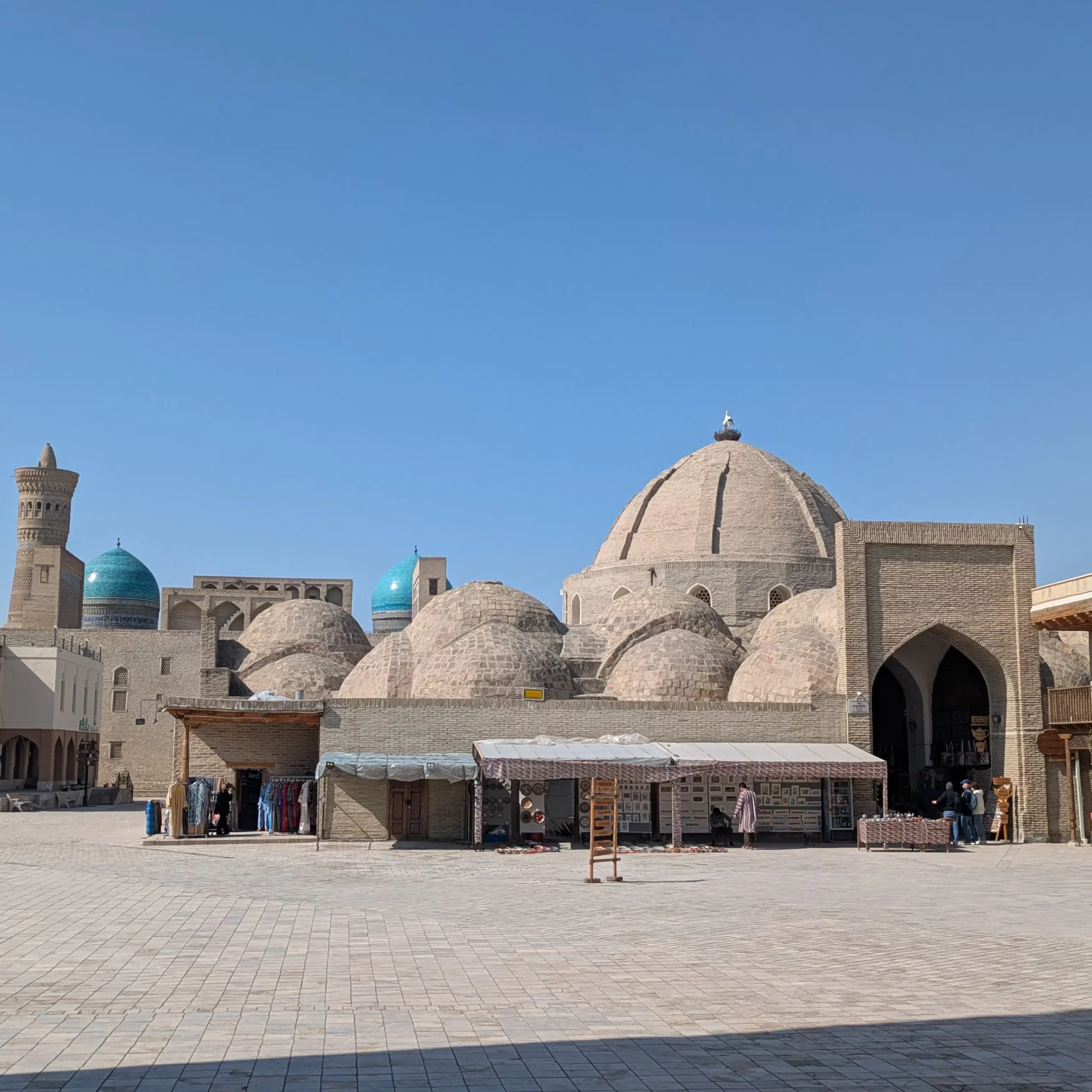
The Po-i-Kalan complex, a true symbol of the city, impresses with its grandeur. Its Kalon minaret, erected in the 12th century, rises majestically to 45 meters in height, once guiding caravans across the vast desert expanses. The Kalon Mosque and Mir-i Arab madrasa, adorned with turquoise tiles and geometric patterns, illustrate the pinnacle of Islamic architecture in Central Asia.
To perfect the experience:
- Folk concert in a madrasa - 05
DAY 5: Visit to outer sites of Bukhara
Bukhara contains architectural treasures on the city's outskirts, witnesses to its rich historical and spiritual past. Among them, three sites stand out for their singularity and cultural importance.
The first is the Emir's summer palace, whose name means "Palace comparable to the stars and the Moon." Built between 1912 and 1918 for the last emir, Seid-Alim-Khan, this palace harmoniously blends Russian architecture with decorative elements from Central Asia.
The Chor Minor madrasa, built in 1807 by the wealthy Turkmen merchant Khalif Niyaz-kul, intrigues with its atypical architecture. Its name, meaning "four minarets" in Persian, refers to the four towers topped with turquoise domes that adorn the building. Although modest in size, Chor Minor captivates with its picturesque charm.
About ten kilometers northeast of Bukhara, in the village of Kasri Orifon, lies the architectural complex dedicated to Bahauddin Naqshband, founder in the 14th century of the Naqshbandi Sufi order, one of the most influential in Sunni Islam. This major pilgrimage site includes the saint's tomb, a Sufi lodge, a mosque, and a minaret, forming a harmonious ensemble where an atmosphere of serenity reigns. The faithful and visitors come here to seek spiritual inspiration and tranquility.
- 06
DAY 6: Departure for Samarkand
Today we leave Bukhara for Samarkand. Depending on your preference, we go there by car (departure in the morning, journey of about 4 hours), or by Uzbek high-speed train, the Afrosiyob (departure in the afternoon, 1h45 journey).
After settling into your hotel, you have free time to relax and discover, at the turn of a street, the breathtaking panorama offered by the Registan during the golden hour, just before sunset.
- 07
DAY 7: Visit to beautiful Samarkand
Samarkand, jewel of Uzbekistan, reveals an architectural heritage of unparalleled richness, a living testament to its central role on the Silk Road.
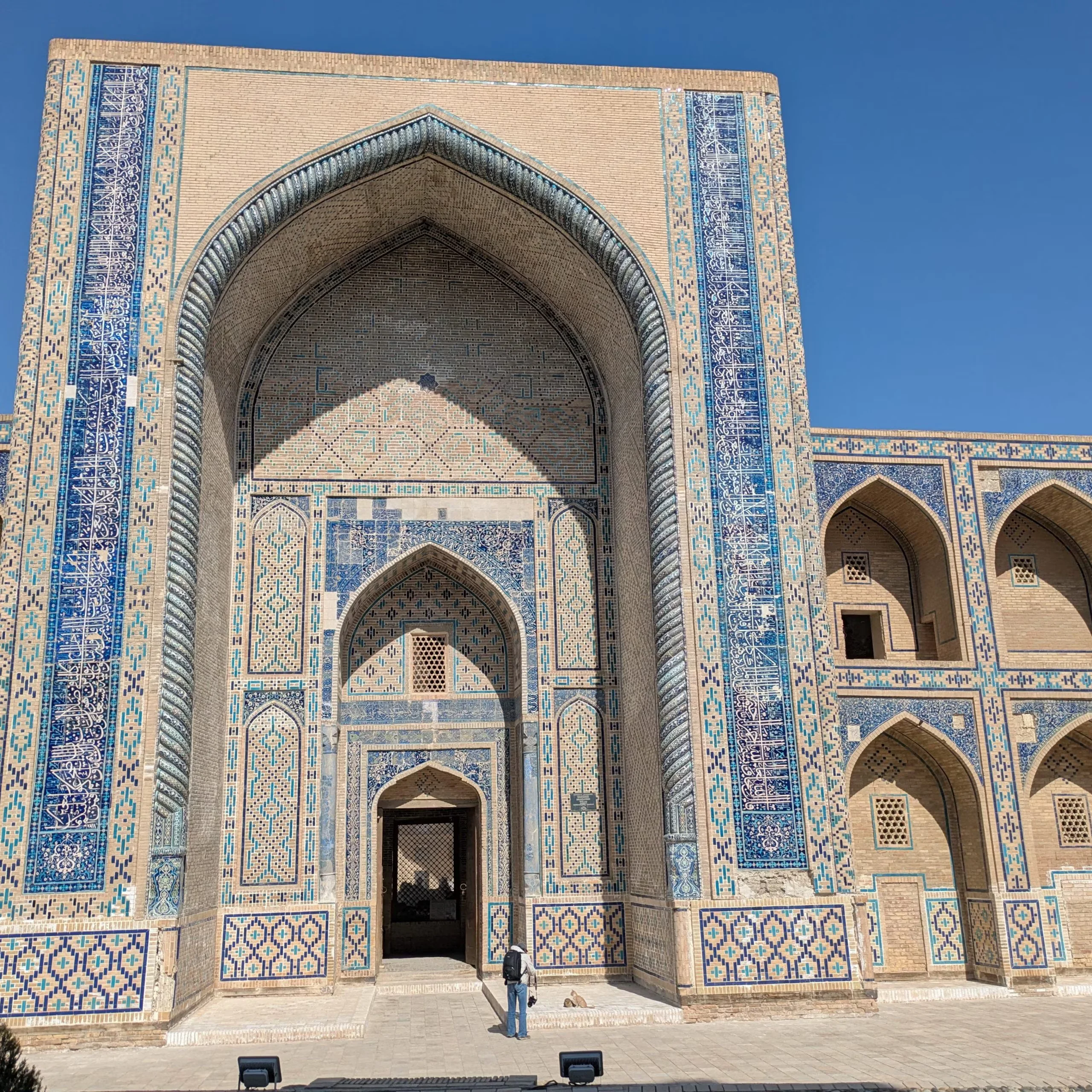
Registan Square, the beating heart of the city, is surrounded by three majestic madrasas: Ulugh Beg, Sher-Dor, and Tilla-Kari. These buildings, adorned with dazzling mosaics and imposing domes, illustrate the pinnacle of Islamic architecture under the Timurids. Their harmonious arrangement creates a visual symphony that amazes with every glance. This place, both solemn and grandiose, seems to capture the very essence of Samarkand's history.
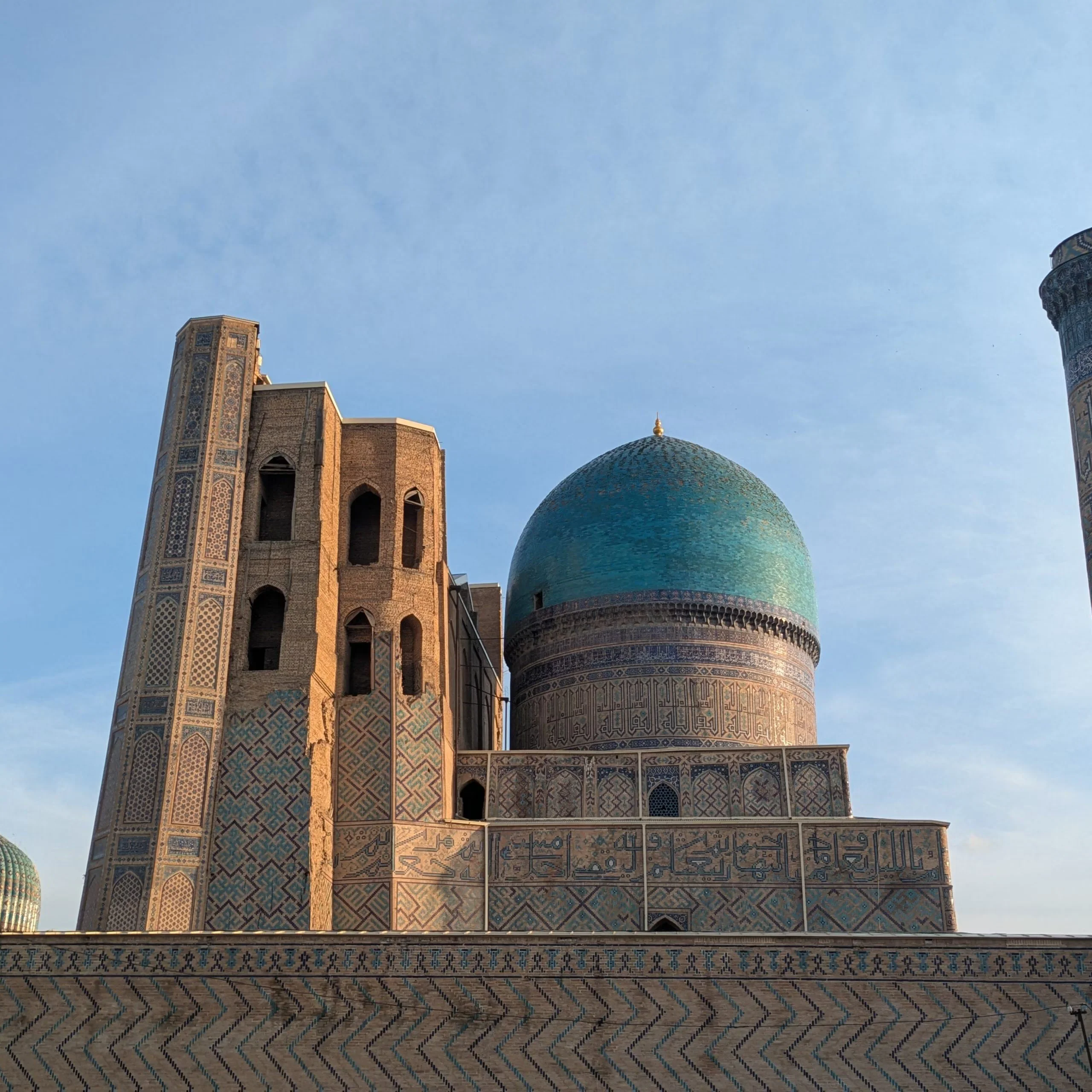
Not far away, the Bibi-Khanym Mosque stands majestically. Erected between 1399 and 1404 by Tamerlane upon his return from India, it was one of the largest mosques in the Islamic world. Despite the ravages of time, its imposing structure and blue ceramic ornaments continue to fascinate. A local legend says that the architect, smitten with Bibi-Khanym, delayed the work to obtain a kiss, adding a romantic touch to its history.
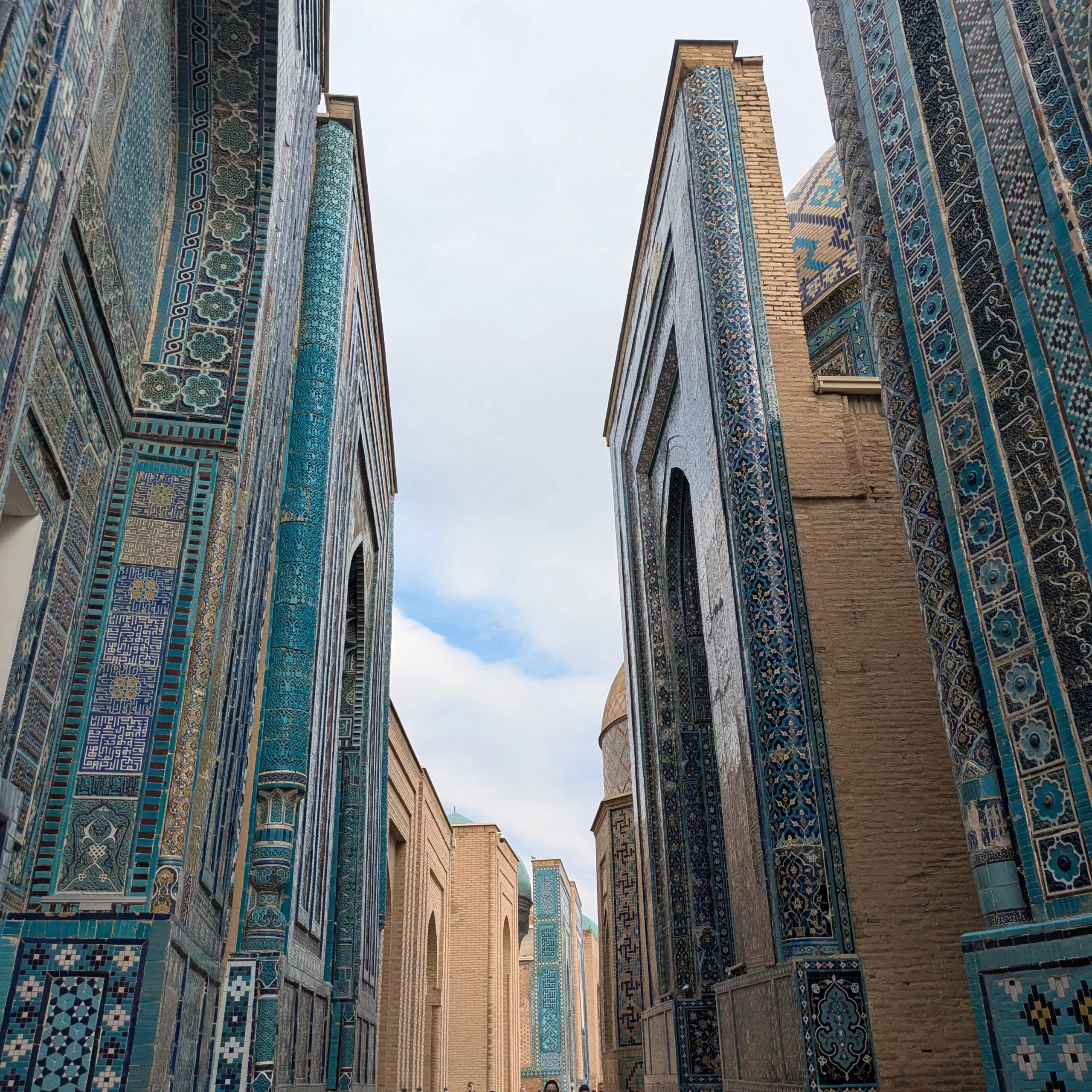
Then, the Shah-i-Zinda necropolis, meaning "the living king," stretches before us. This sacred site, with its mausoleums dating from the 11th to 19th centuries, houses the tomb of Qusam ibn-Abbas, cousin of the Prophet Muhammad. The mausoleums, adorned with ceramic tiles in turquoise and azure tones, form an enchanting avenue, reflecting the artistic evolution of Samarkand through the ages.
Nomadistan's note: We have taken some liberties with superlatives to describe Samarkand, because it is impossible to capture all its splendor with simple words. If Goethe had had the privilege of discovering this city, he would probably have said: "See Samarkand and die"!
- 08
DAY 8: Hike to Taxtakaracha Pass (or free time)
For this eighth day, we will take a break from our rather urban circuit and set out to discover Uzbek nature. We will head toward Urgut and Taxtakaracha pass, which connects Samarkand to Shakhrisabz, crossing the Zarafshan mountains. The pass, situated at 1700m, offers spectacular panoramas of the surrounding valleys and peaks. Hiking trails start from the pass area, allowing exploration of the region on foot.
Difficulty level: moderate.
Alternative: If you do not wish to hike, it is possible to plan, instead of this, a day of free time in Samarkand to rest, stroll, go to Siyob Bazaar, etc. - 09
DAY 9: Departure for Tashkent
This morning, we offer you some free time to relax or do some shopping. In the afternoon, we will take the Afrosiyob high-speed train to reach the Uzbek capital (about 300 kilometers for 2h30 by train).
In the evening, you will settle into your hotel for a restful night before visiting Tashkent the next day.
- 10
DAY 10: Visit to the capital of Uzbekistan, Tashkent
Today, we will take our time to leisurely discover Tashkent. The vibrant capital of Uzbekistan, it is a city of many faces, where the heritage of the Silk Road blends with Soviet architecture and the boldness of modernity. Largely destroyed by an earthquake in 1966, the city has risen again, today offering a fascinating contrast between tree-lined avenues of neoclassical buildings, lively bazaars, and preserved historic quarters.
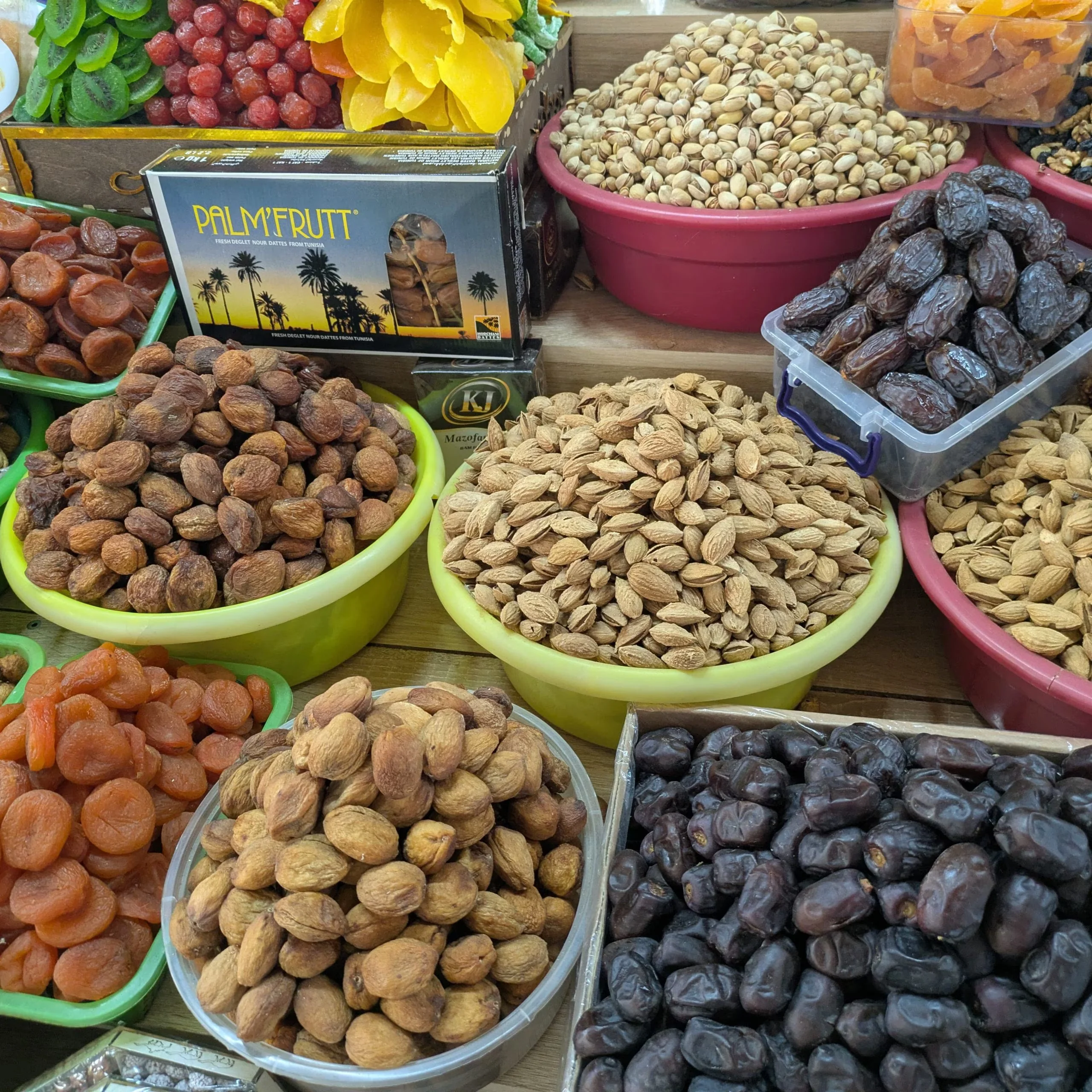
In the heart of Tashkent, let yourself be captivated by the atmosphere of Chorsu Bazaar, one of the oldest markets in Central Asia, where colorful spices, dried fruits, and golden breads spread beneath the immense turquoise dome. Not far away, the Kukeldash madrasa, dating from the 16th century, recalls the time when the city was a major cultural and intellectual crossroads.
But Tashkent is also a capital resolutely turned toward the future: its metro stations, true underground art galleries, rival those of Moscow, while the city comes alive in the evening around its many trendy cafes and restaurants.
- 11
DAY 11: Continued visit of Tashkent
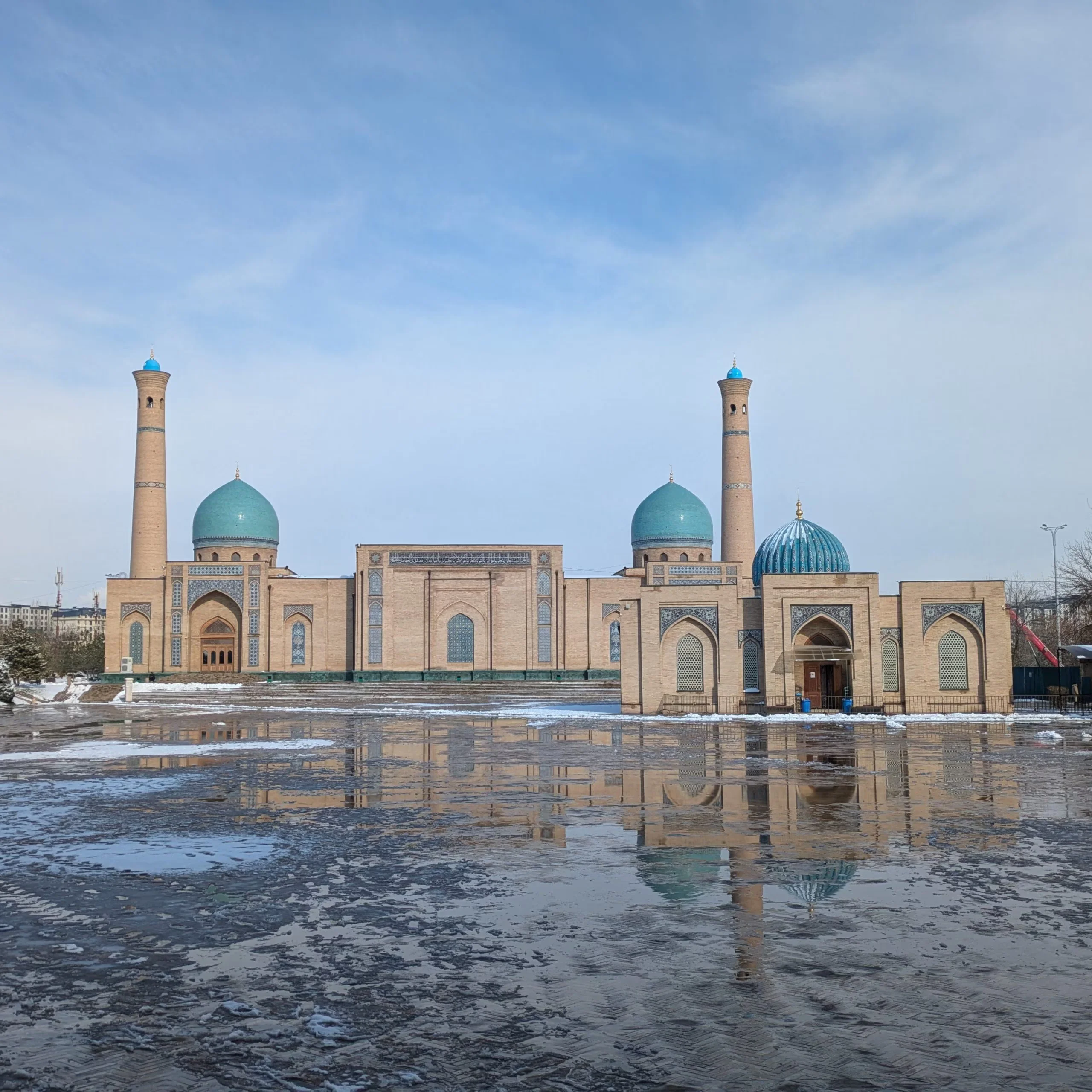
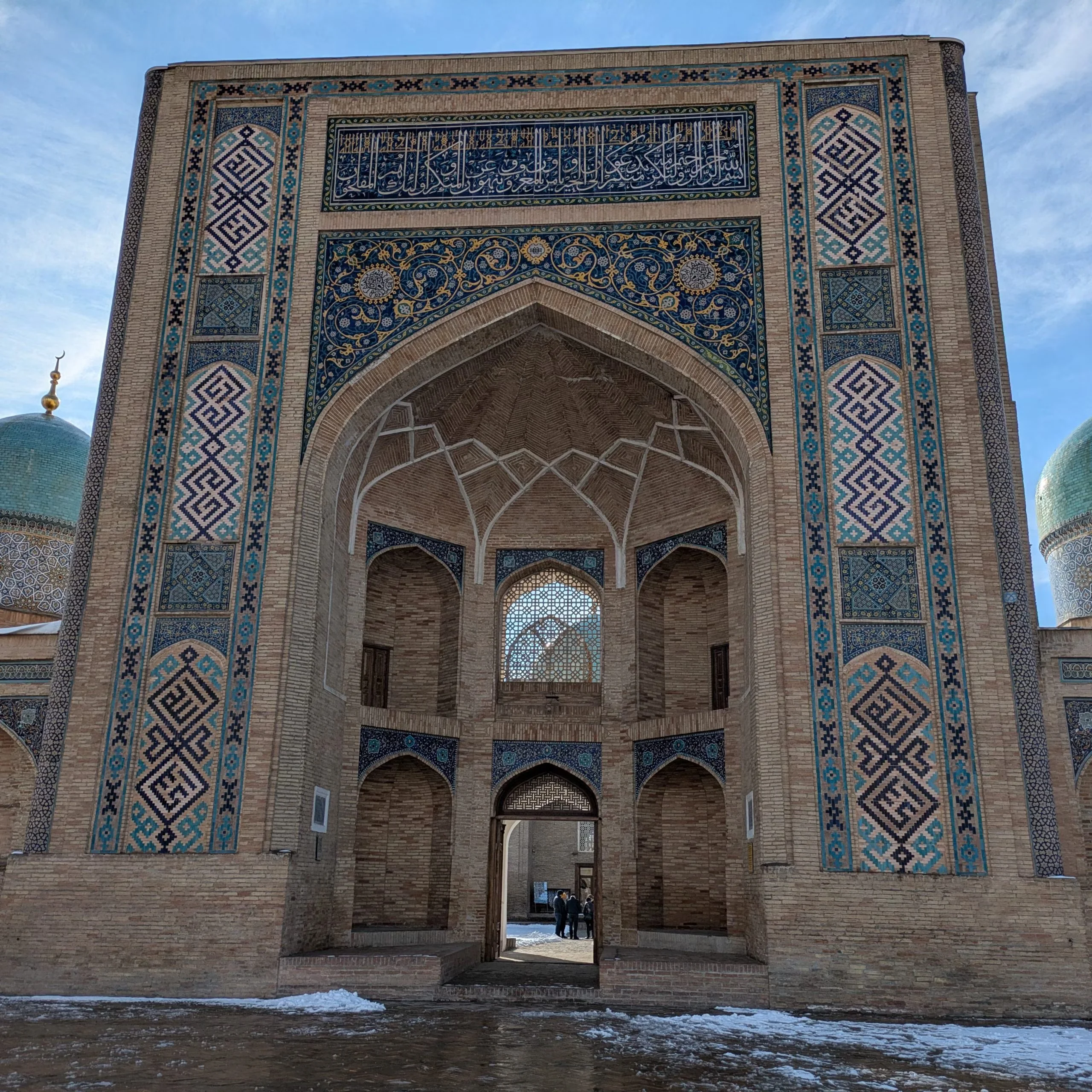
In the heart of the old town, Khast-Imam Square is a jewel of Tashkent's heritage. This vast architectural ensemble is the spiritual center of the capital, housing the Barak Khan madrasa, the Tilla Sheikh Friday mosque, and the Moyie Moubarak library, where rests one of the oldest copies of the Quran in the world, the famous Othman Quran, dating from the 7th century. Strolling through this square is like going back in time, among slender minarets, azure blue domes, and facades finely adorned with mosaics. A place imbued with serenity, perfect for a break away from the city's bustle.
A few kilometers away, a change of scenery with the Tashkent Railway Museum, a paradise for train and industrial history enthusiasts. This open-air museum exhibits an impressive collection of steam, electric, and diesel locomotives dating from the Soviet era. Here, you can climb into the cabs, observe the mechanisms, and even imagine traveling across the vast steppes of Central Asia aboard these steel behemoths. An unusual place, ideal for the curious and railway enthusiasts.
- 12
DAY 12: Transfer to the airport and return flight
It's time to end our journey through the history of the Silk Road! We drop you off at the airport for your return flight... hoping you enjoyed your adventure and that it will make you want to continue exploring Central Asia with us!