MANGYSTAU: SPIRITUAL JOURNEY & PILGRIMAGE TO THE LAND OF 362 SAINTS
Request a quoteDiscover Mangystau, a mystical region of Kazakhstan, renowned for its spectacular desert landscapes and rich spiritual heritage. This tour takes you in the footsteps of the 362 Saints, emblematic figures of the Sufi tradition, and immerses you in an adventure blending nature, culture, and spirituality.
Tour images
Detailed Itinerary
- 01
DAY 1: Welcome to Mangystau!
Welcome to Kazakhstan! Upon your arrival at Aktau airport, our team warmly welcomes you to this land of contrasts. We then head to your hotel, where you can relax and soak in the peaceful atmosphere of the Caspian coast. Enjoy this first day to rest and recharge before our great adventure begins tomorrow morning.
- 02
DAY 2: Kenty-baba Necropolis - Sultan-epe and Shakpak-ata Mosques
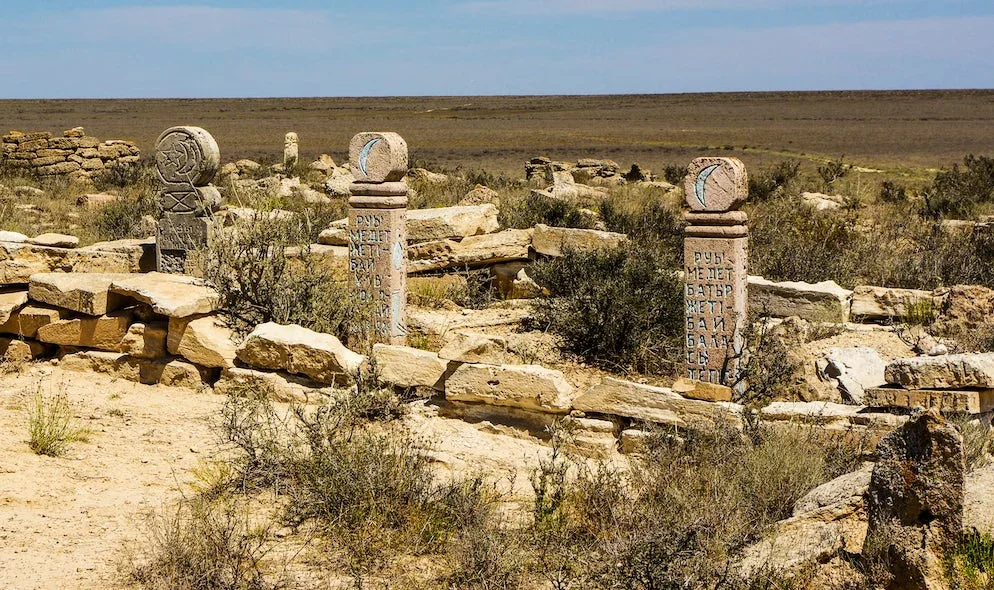
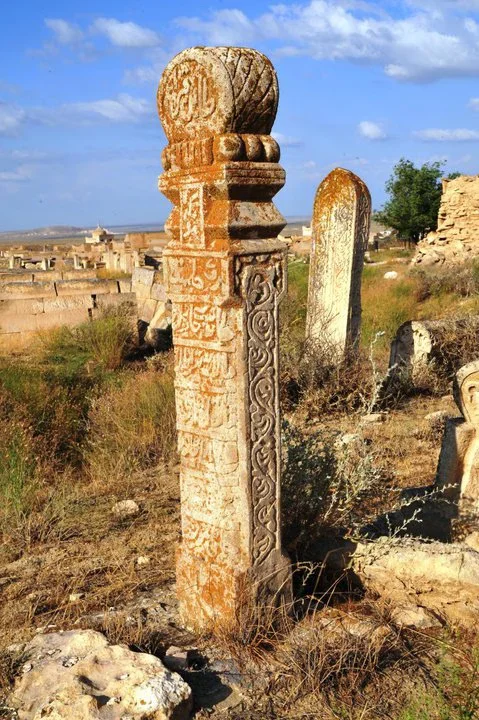
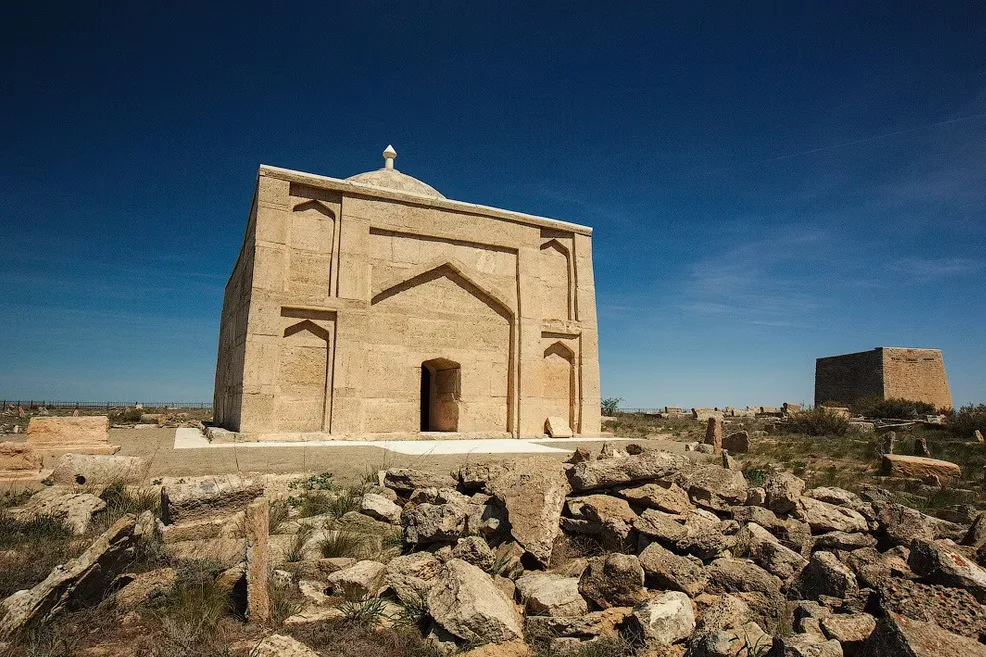
The Kenty-Baba necropolis is a sacred and historic site, dating from the 10th to 16th centuries. This remarkable location houses approximately 130 funerary monuments, including the central mausoleum, erected in honor of the revered saint who gave it his name. Its walls adorned with historical engravings, plant motifs, and Sufi symbols bear witness to the cultural richness of the Great Steppe. According to legend, Kenty-baba was the elder brother of Sultan-epe, a disciple of the famous Sufi poet Ahmed Yasawi, whose magnificent mausoleum is located in Turkistan. Today, tourists and Kazakhs visit this site with its particular spiritual aura to admire its architecture, pray, and honor ancestral spirits.
Nearby, we visit the Sultan-epe Necropolis, patron saint of fishermen and navigators. Like his brother, he was a student of Yasawi.
We continue to the Shakpak-ata mosque, elegantly carved into the rock. Several centuries ago, this sacred place was the scene of Sufi dances and healing rituals.
- 03
DAY 3: Ybyqty Gorge and Karaman-ata Necropolis
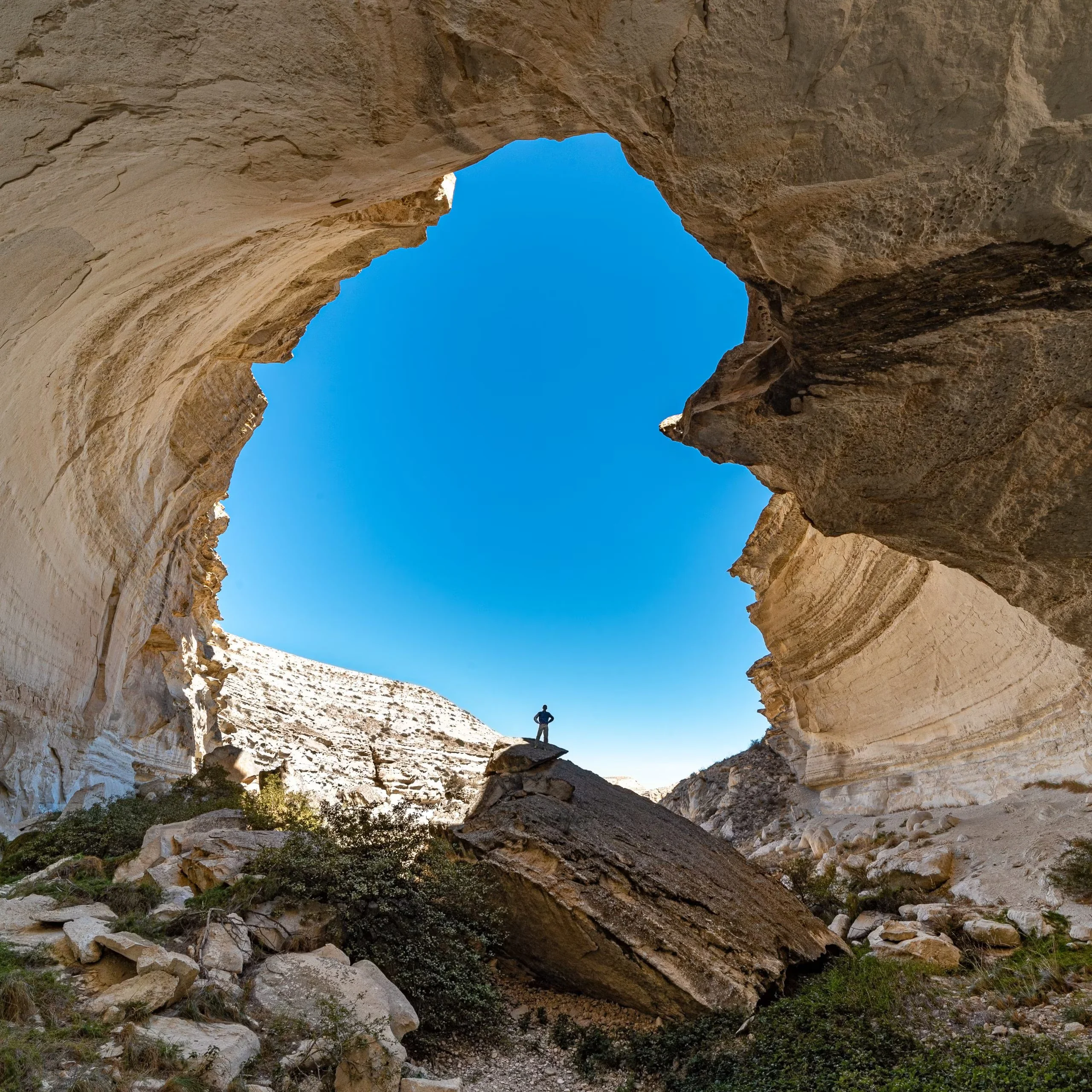
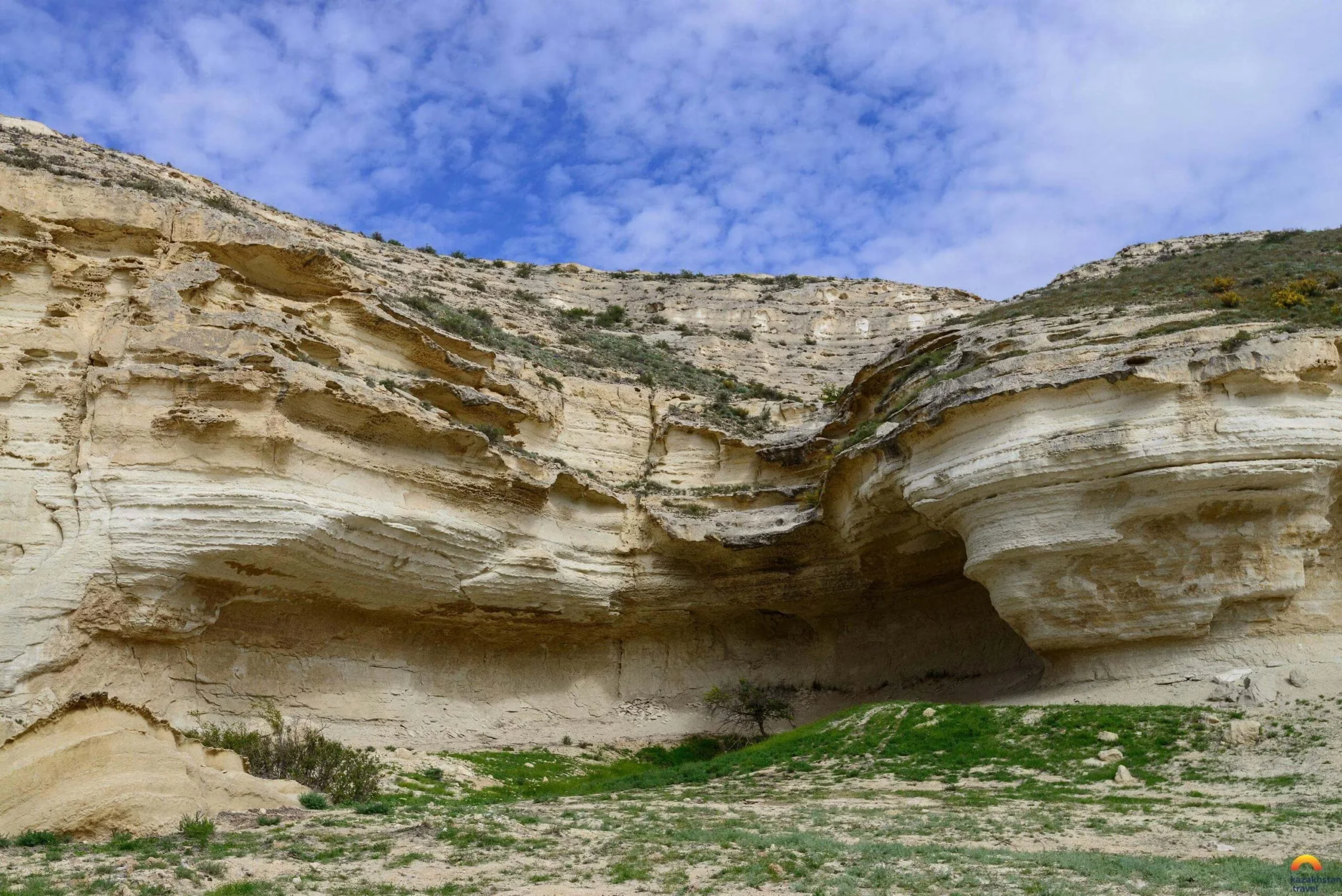
We continue our journey through time with the exploration of Ybyqty Gorge. This narrow canyon winds like a river, revealing astonishing formations at every turn. Its walls adorned with honeycomb-like cavities resemble honeycombs, porous chocolate, or bones seen under a microscope. These unique formations likely originated from remnants of marine life that once inhabited the bottom of the ancient Tethys Ocean: perhaps skeletons of coral reefs or other marine organisms, or the result of chemical reactions under water pressure.
Our day ends with a visit to the Karaman-ata Necropolis. This is one of the oldest necropolises in Mangystau, dating back to the 8th-9th centuries. It houses an underground mosque from the 12th-13th centuries, where the Sufi sage Karaman-ata is said to rest. Spanning 7 hectares, the site includes tombs, the oldest dating from the Oghuz and Kipchak era, and ornate 19th-century mausoleums linked to the Adai (the tribe to which many Kazakhs from Mangystau belong).
- 04
DAY 4: Shopan-ata Necropolis
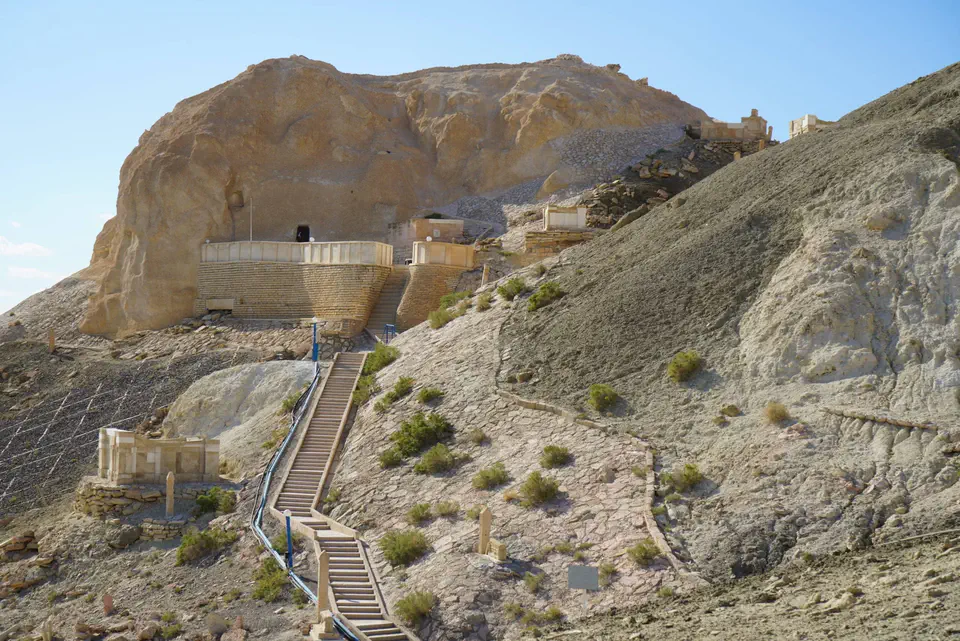
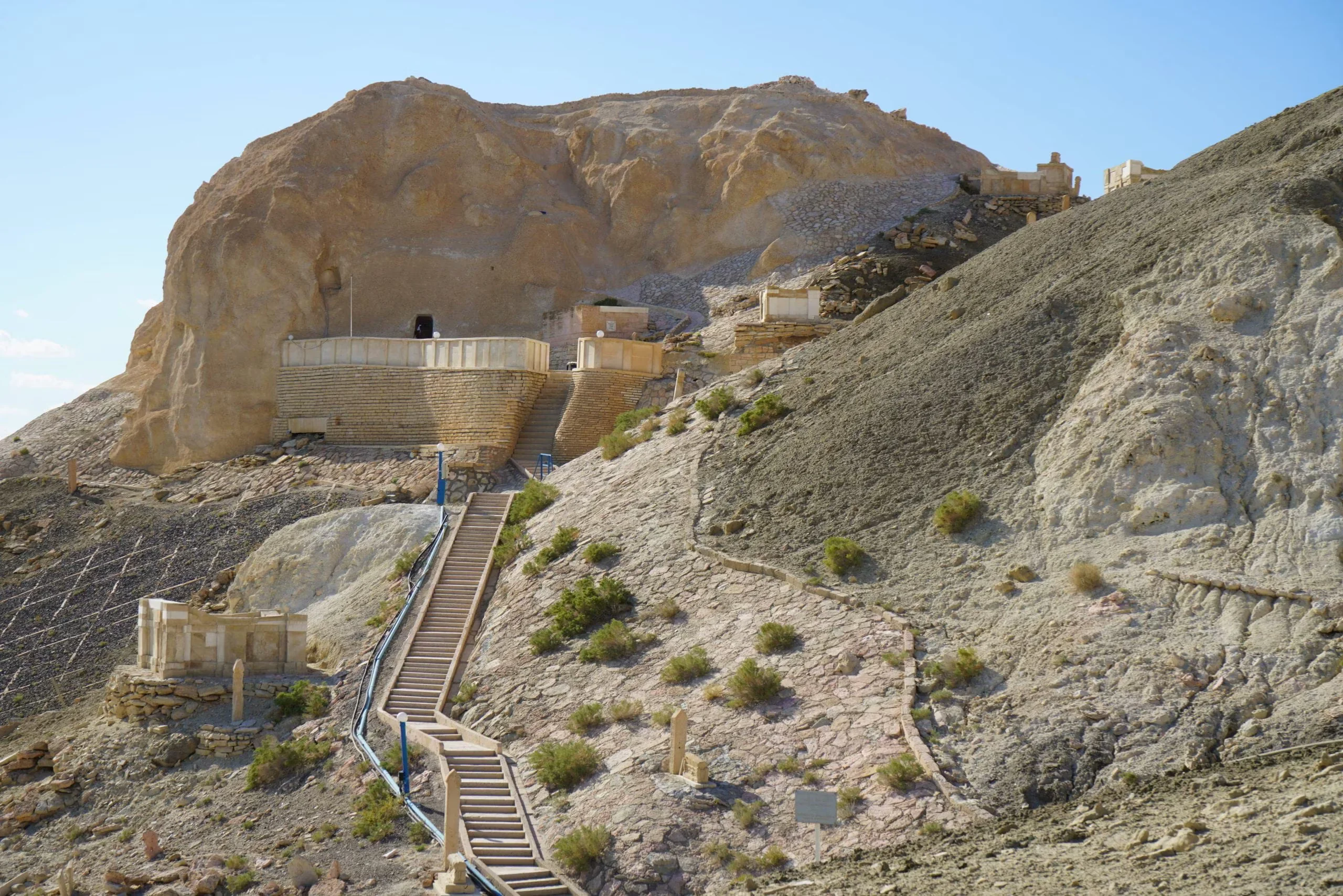
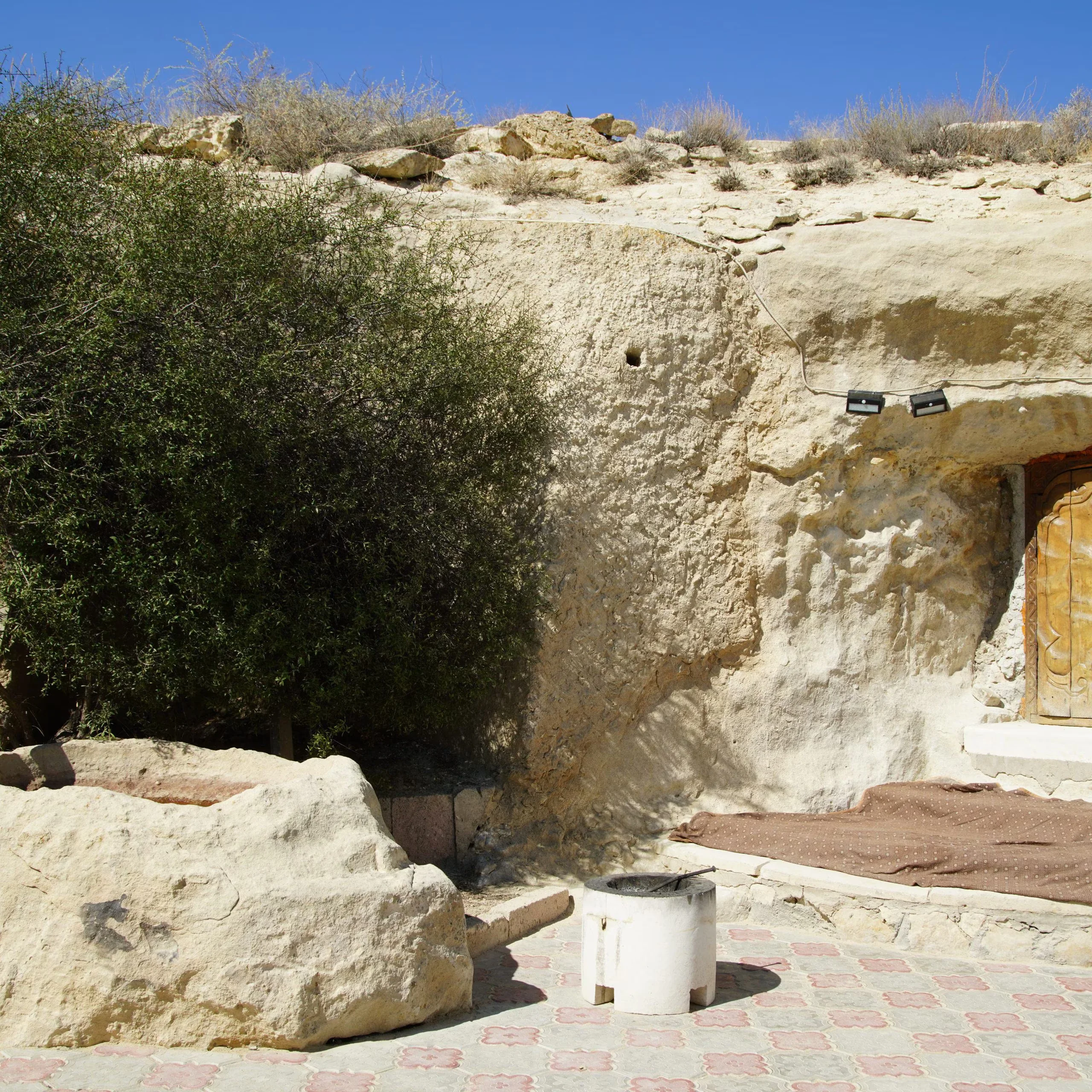
Located 20 km northwest of Senek village, in the Karakiya district (Mangystau region), the Shopan-Ata mosque and necropolis sit on an ancient caravan route linking Khwarezm, a historic region of Central Asia, to other territories. Carved into the rock, the mosque comprises 12 interconnected rooms dedicated to religious ceremonies, teaching, and domestic needs. The main hall, naturally lit by a skylight, houses a sacred tree, while Shopan-Ata's tomb rests beneath a wall, alongside those of his wife and daughter. A courtyard with a well and a second religious building, as well as a centuries-old mulberry tree renowned for its healing properties, complete this site.
According to legend, Shopan-Ata, a disciple of Khoja Ahmed Yasawi and mentor of Beket-Ata, received the mission to spread Sufism. Shopan-Ata, seeking a sacred place to establish a mosque, is said to have shot an arrow through the shanyrak (the circular upper part of the yurt, symbol of the sky and universe in nomadic culture). He vowed to build his sanctuary at the exact spot where the arrow would fall.
The arrow flew far, crossing the steppe, and finally landed in the ground at an isolated site in Mangystau
It was there that he decided to build the underground mosque and establish the necropolis, which later became a pilgrimage site.This site attracts pilgrims from around the world and constitutes a traditional stop before visiting the famous Beket-Ata mosque.
- 05
DAY 5: Beket-ata Underground Mosque
The underground mosque of Beket-Ata, built in the 18th century by the Sufi mystic Beket Myrzagululy, is a major pilgrimage site in Kazakhstan. It is carved into the rock and comprises four rooms, some receiving natural light. One room houses Beket-Ata's remains, while others are dedicated to his sister, his staff, and prayer.
Beket, born in 1750 near Atyrau, studied Sufism in Khiva before building several underground mosques. He rests in the one bearing his name. A spiritual and legendary figure, he is honored as both a saint and a hero. The mosque is surrounded by legends recounting Beket's mystical powers, notably his ability to move instantly between his mosques and his status as "auliye" (saint). A peaceful and spiritual figure, he is also honored as "batyr" (hero).
Descending the long steps to the mosque offers a unique spiritual experience, in a place imbued with calm and harmony, testifying to the exceptional heritage left by Beket-Ata.
- 06
DAY 6: Bozzhira
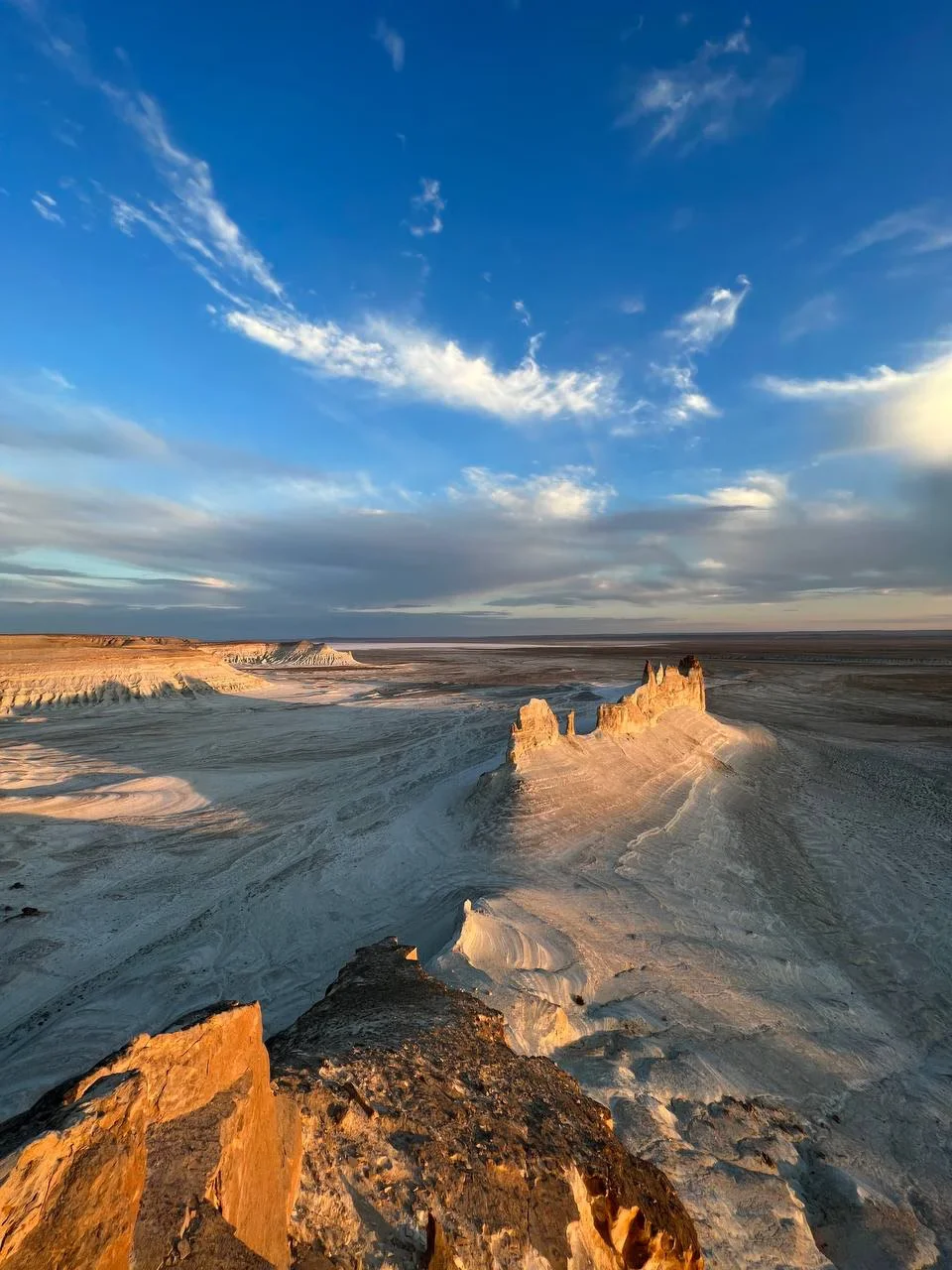
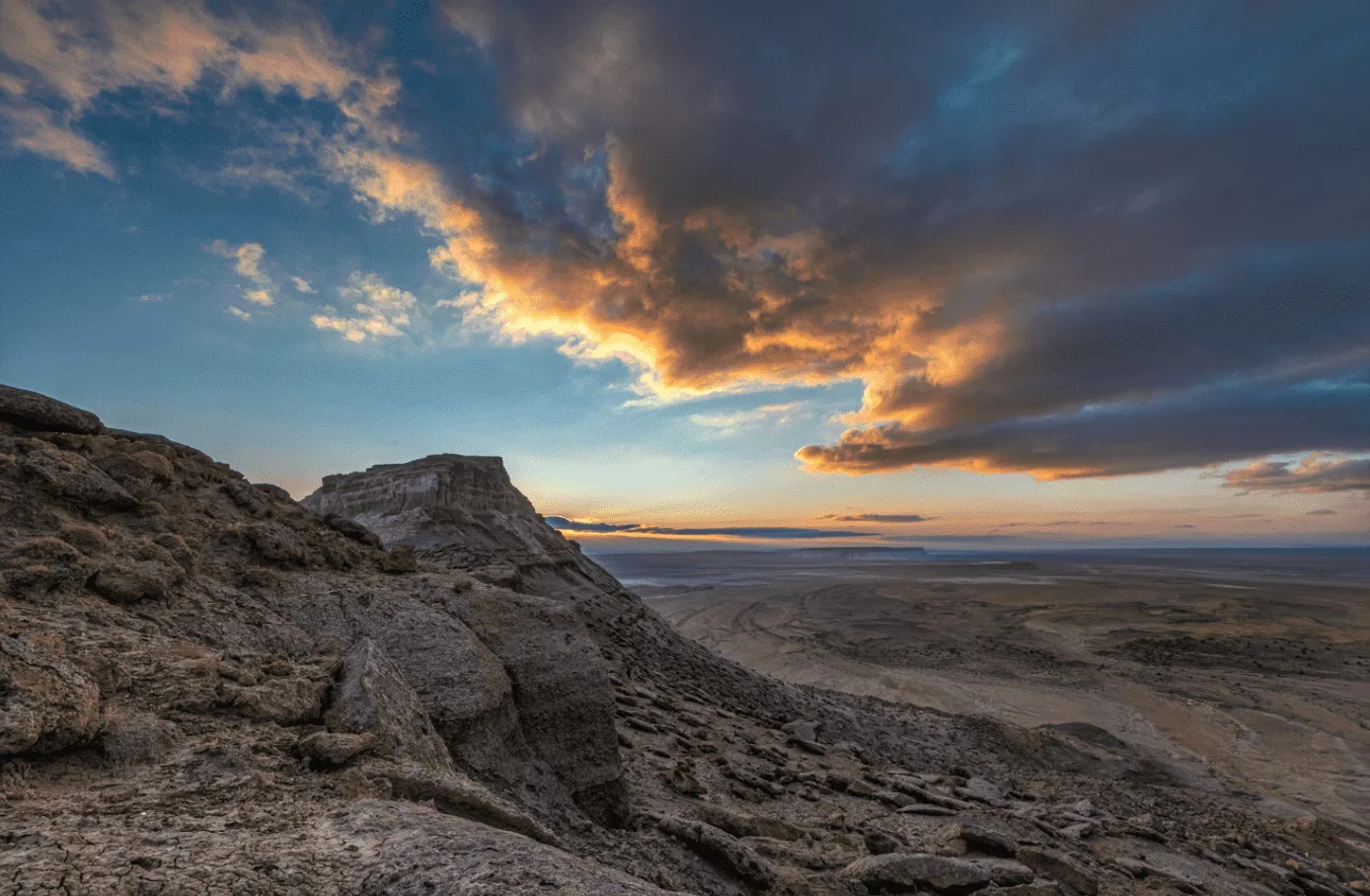
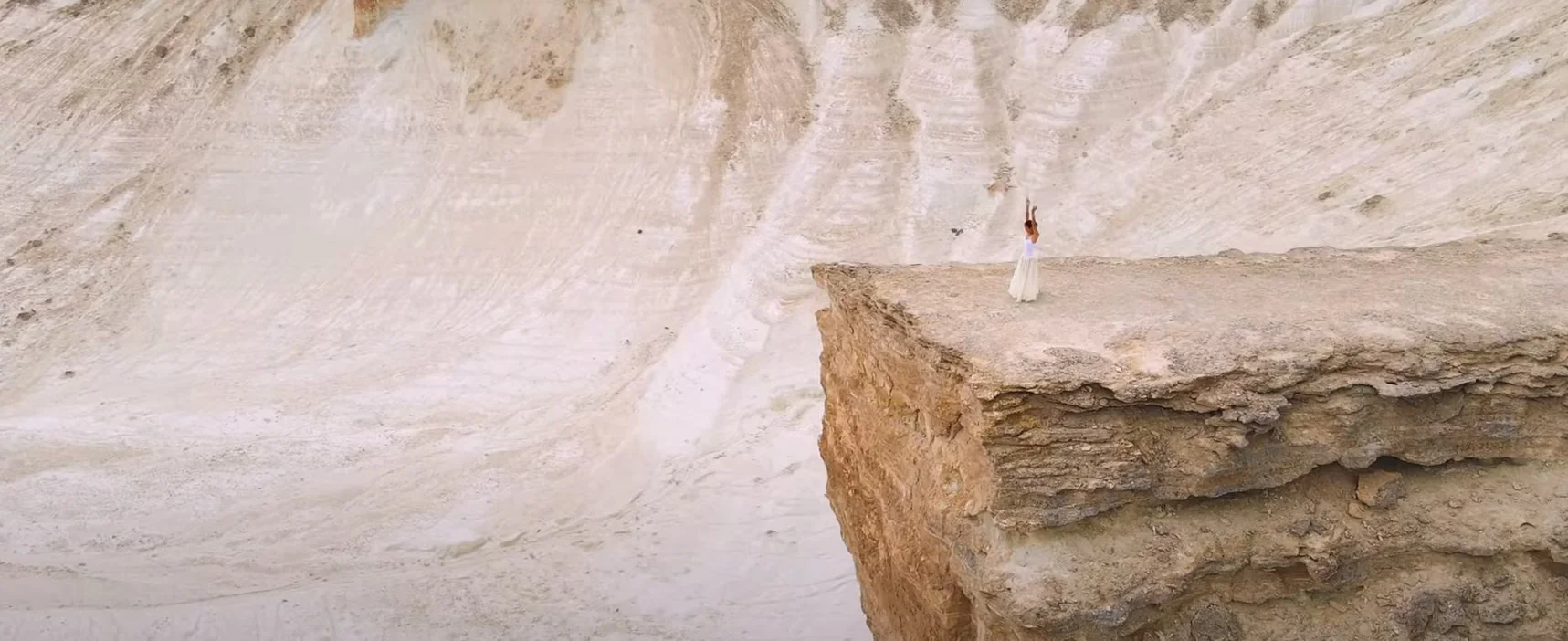
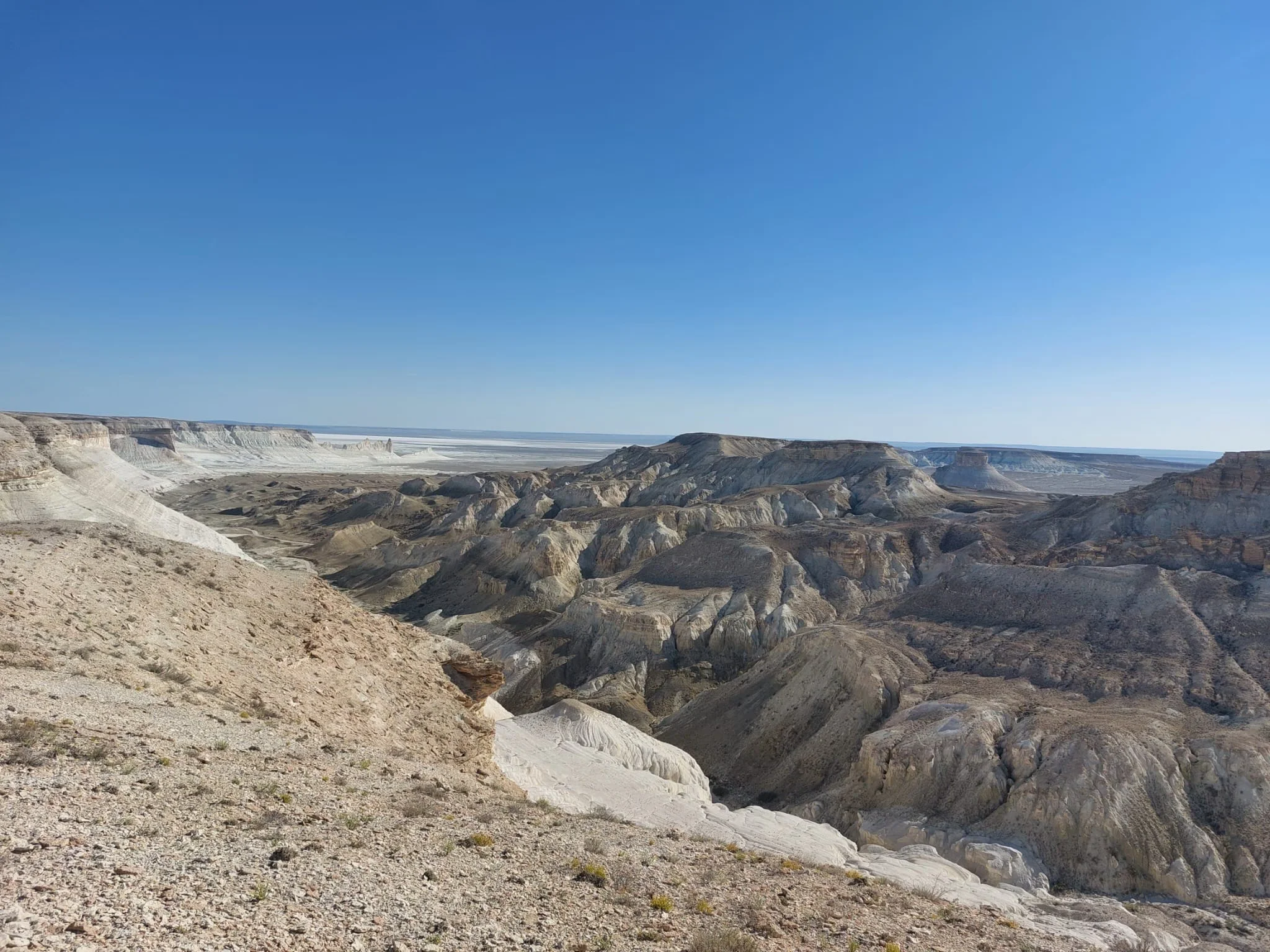
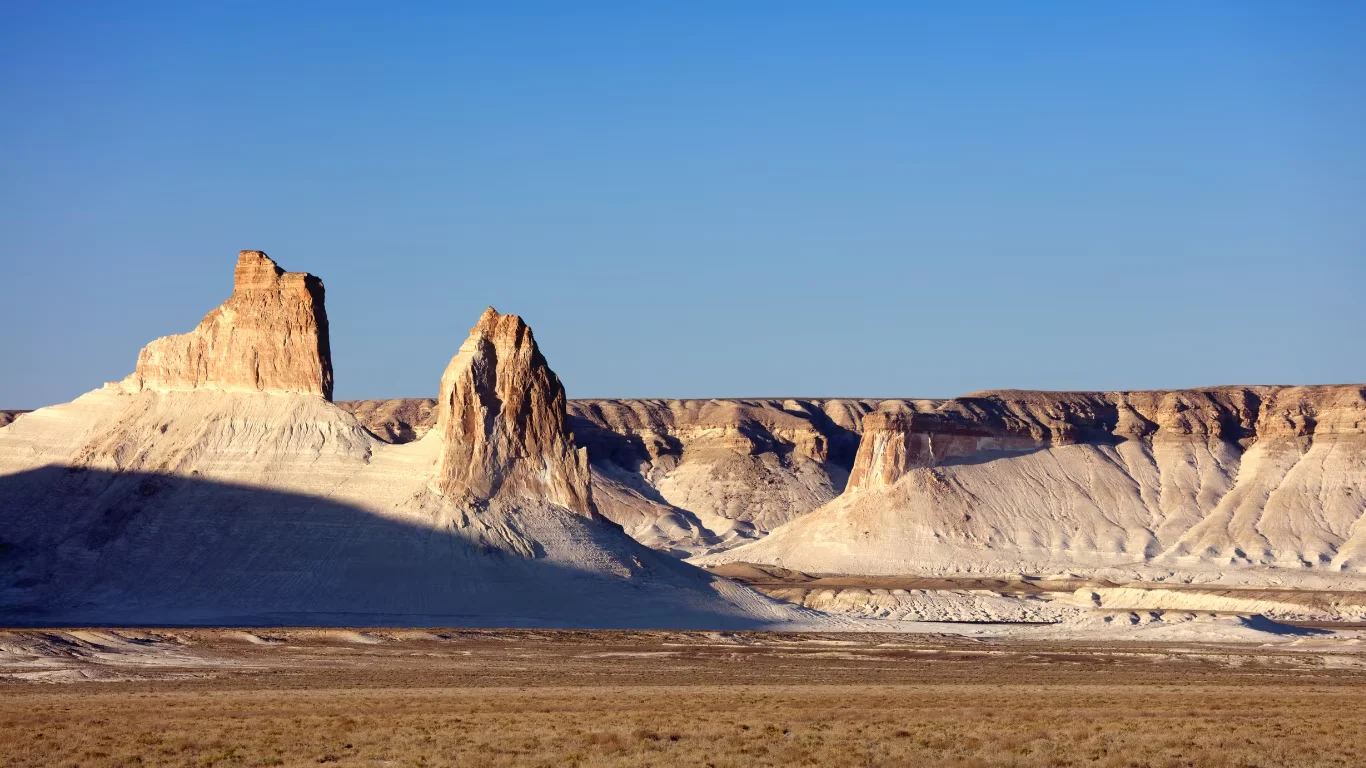
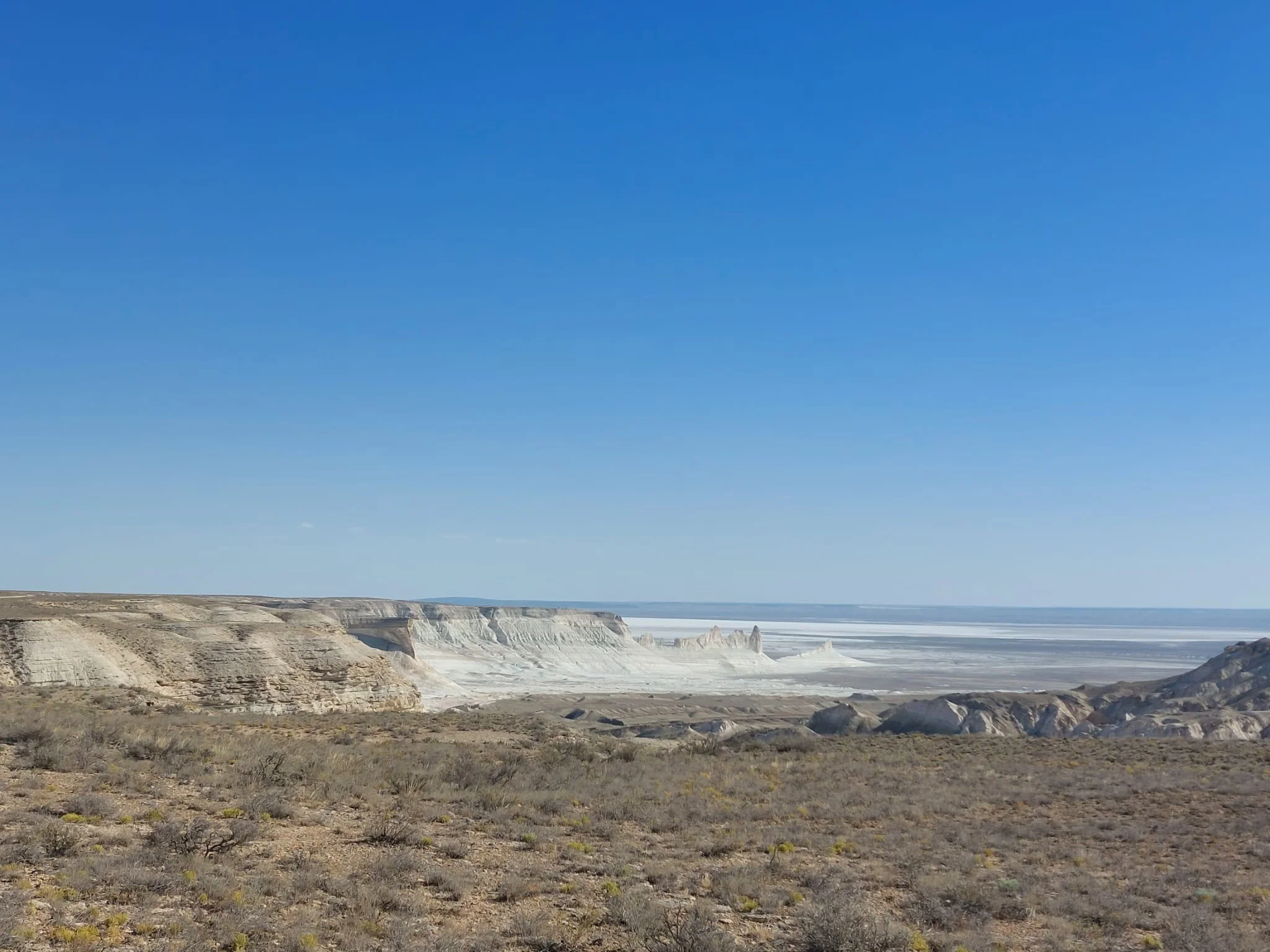
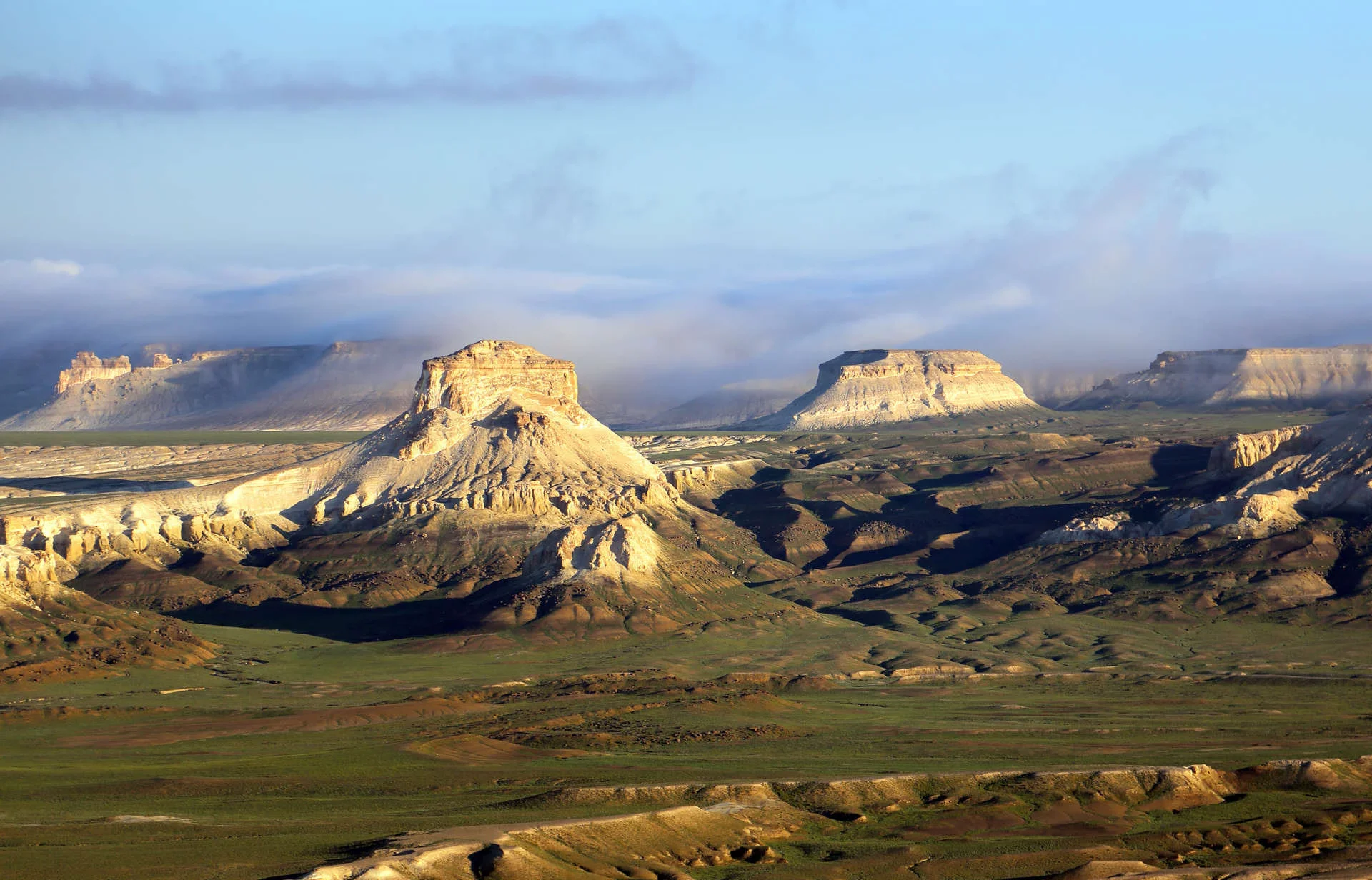
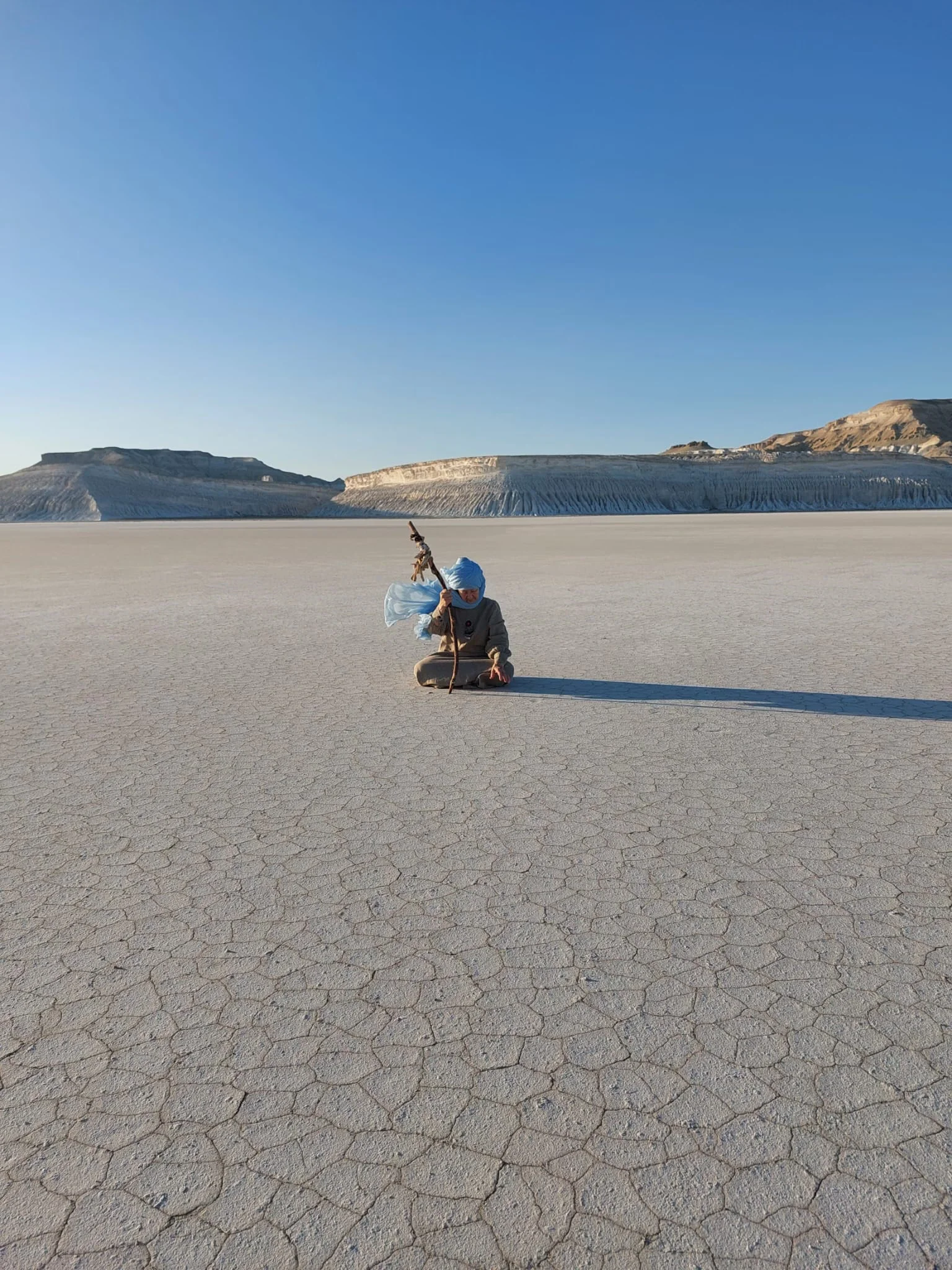
We spend the day at Bozzhira, a true pearl of Mangystau, located west of the Ustyurt Plateau. This exceptional site, once covered by the Tethys Ocean, is known for its limestone and white sandstone cliffs, reaching up to 250 meters, and containing marine fossils. The extreme climate limits life to resistant species, but rare plants like rock hyacinth and acacias can be found, as well as lizards and tortoises. Summer temperatures are very high, but nights are cool. Bozzhira is renowned for its spectacular sunrises and sunsets, an unforgettable experience.
The site offers three impressive viewpoints: the "Martian Panorama," the "Dragon's Ridge," and the "Fangs Formation."
- 07
DAY 7: Mount Bokty and Senek Dunes
Mount Bokty, standing 165 meters high, is distinguished by its pastel layers of white, yellow, reddish, and brown. It evokes a gigantic cake placed in the heart of a salt plain. Its colorful layers result from Cretaceous sandstone deposits stacked over time. This landscape becomes even more spectacular at sunrise or sunset, when light transforms its hues into a true spectacle. A wonder to behold, which amply rewards the effort required to reach it.
As for the Senek dunes, which we also visit, they stretch for several kilometers and are constantly migrating. Some reach more than 25 meters in height. The exotic landscape they form attracts many travelers.