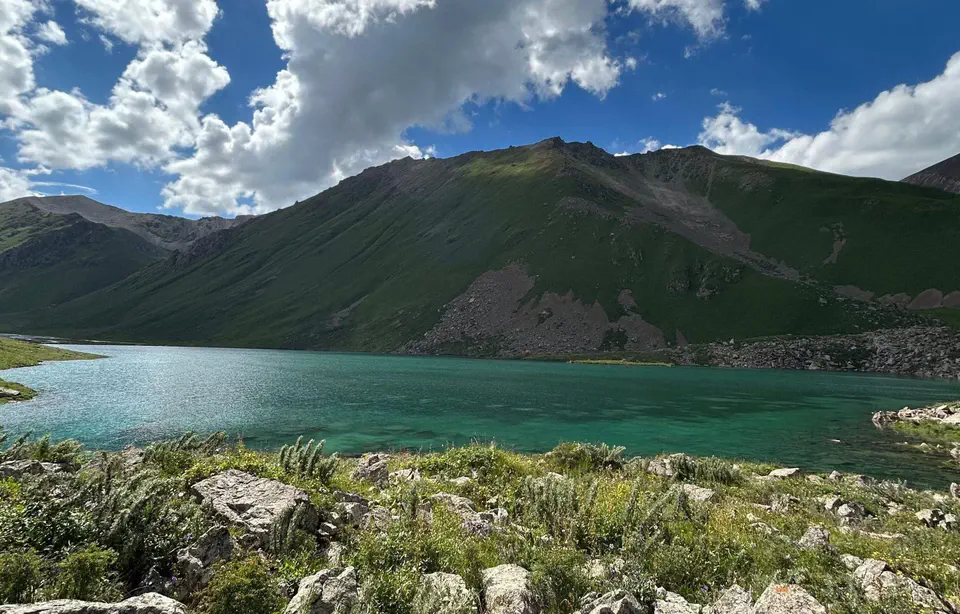
Beyond Kazakhstan's great steppes lies a land sculpted by wind, water, fire, and time. A mosaic of powerful and contrasting landscapes, still little known to travelers. Welcome to the Almaty region, this necklace of wild pearls that Nomadistan invites you to discover.
This rare and carefully designed circuit takes you far off the beaten path, where nature becomes a grandiose theater: from flaming canyons to the translucent waters of high-altitude lakes, from musical dunes to multicolored mountains.
We head to Bayankol Valley, nestled at the frontiers of Kazakhstan, Kyrgyzstan, and China. This peaceful place offers a spectacular view of Khan Tengri (7,010 m), the mythical summit of the Tian Shan and the country's highest point.
Designed for travelers seeking authenticity, wide-open spaces, and diversity, this route takes you to places still preserved, where the silence of the steppes meets the murmur of the mountains. On foot or horseback, each step in these grandiose landscapes becomes a sensory immersion, an intimate encounter with nature and nomadic traditions.
Tour images
Detailed Itinerary
- 01
DAY 1: TURGEN GORGE - ASSY PLATEAU
Early in the morning, we leave Almaty heading east for a day under the sign of nature, wide-open spaces, and celestial mysteries.
Our adventure begins with a winding road through the foothills of Ile-Alatau National Park, to the Turgen Gorge, a spectacular green setting where trails are fragrant with pine. A short walk takes us to the Bear Waterfall, 30 meters high, whose roar mingles with birdsong.
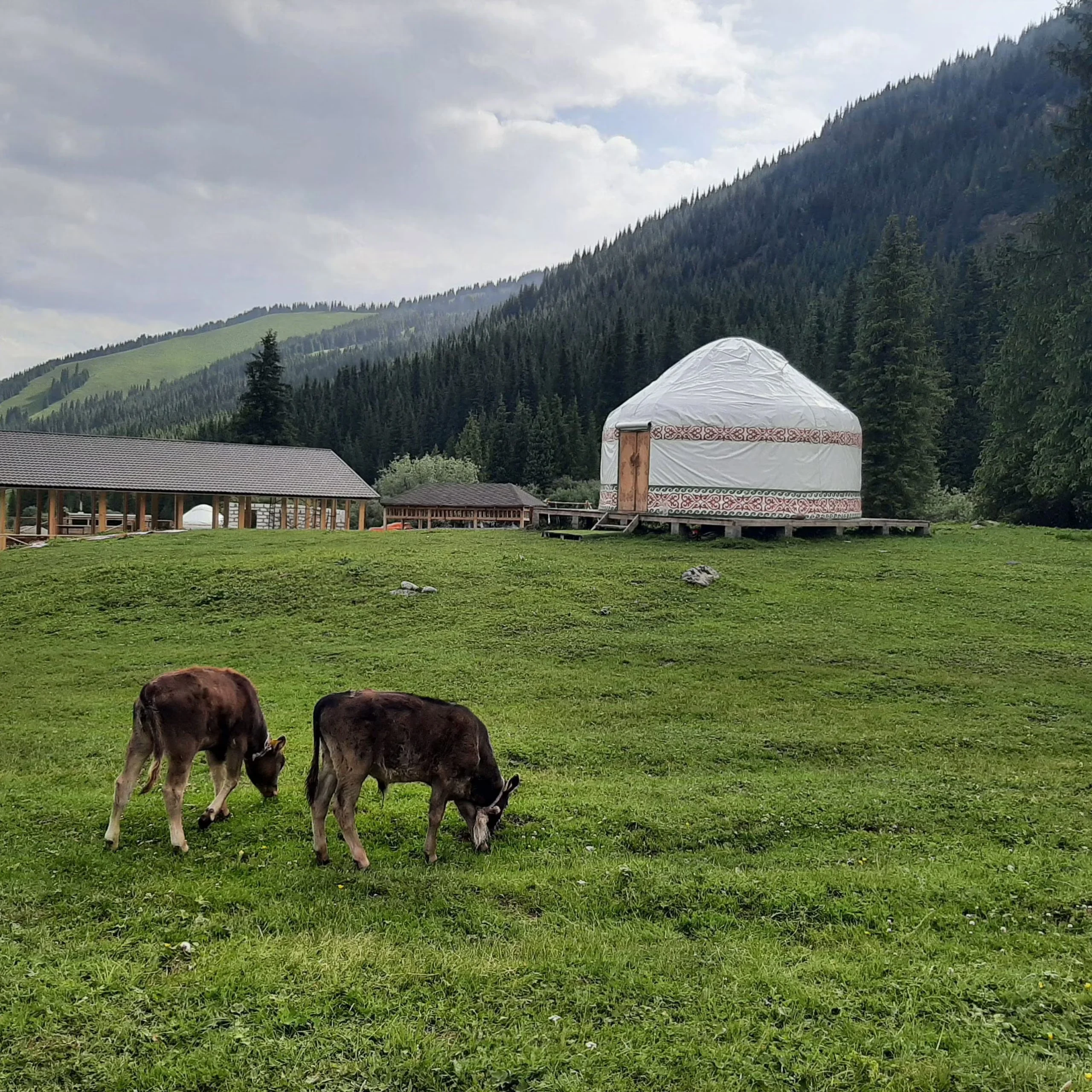
Then, we gain altitude to reach the Assy Plateau, a vast grassy expanse at over 2,500 meters altitude, where nomadic herders' yurts punctuate an infinite landscape. The road, sometimes chaotic, crosses summer pastures populated with free-roaming horses and peaceful herds. A picnic lunch facing the mountains will allow you to regain strength in this grandiose setting.
The afternoon continues in the heights, to the Assy-Turgen observatory, perched at 2,750 meters altitude. This site, isolated from all light pollution, welcomes astronomers from around the world who come to study the stars.
We continue our crossing of the plateau with multiple stops to admire the panorama. A dinner and night under the stars conclude this first day.
- 02
DAY 2: BARTOGAI RESERVOIR - CHARYN CANYON - TEKES VALLEY
We leave our camp on the Assy Plateau to begin a descent toward the Bartogai Reservoir, nestled about 186 km east of Almaty. This artificial lake, created in 1986 on the Chilik River, extends over 13 km² and contains up to 320 million m³ of water. Many bird species have settled there. Surrounded by hills and mountains, the reservoir offers a serene landscape.
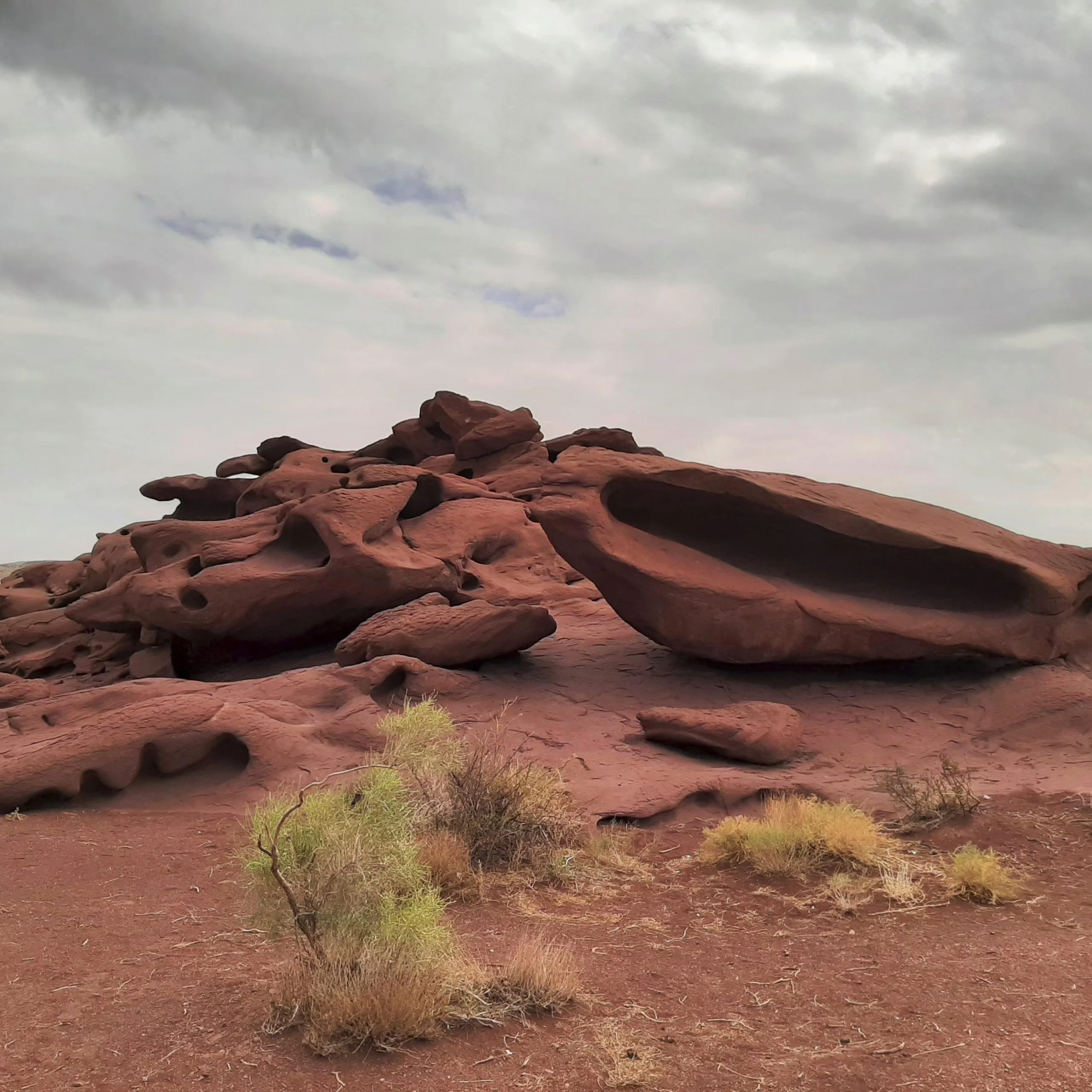
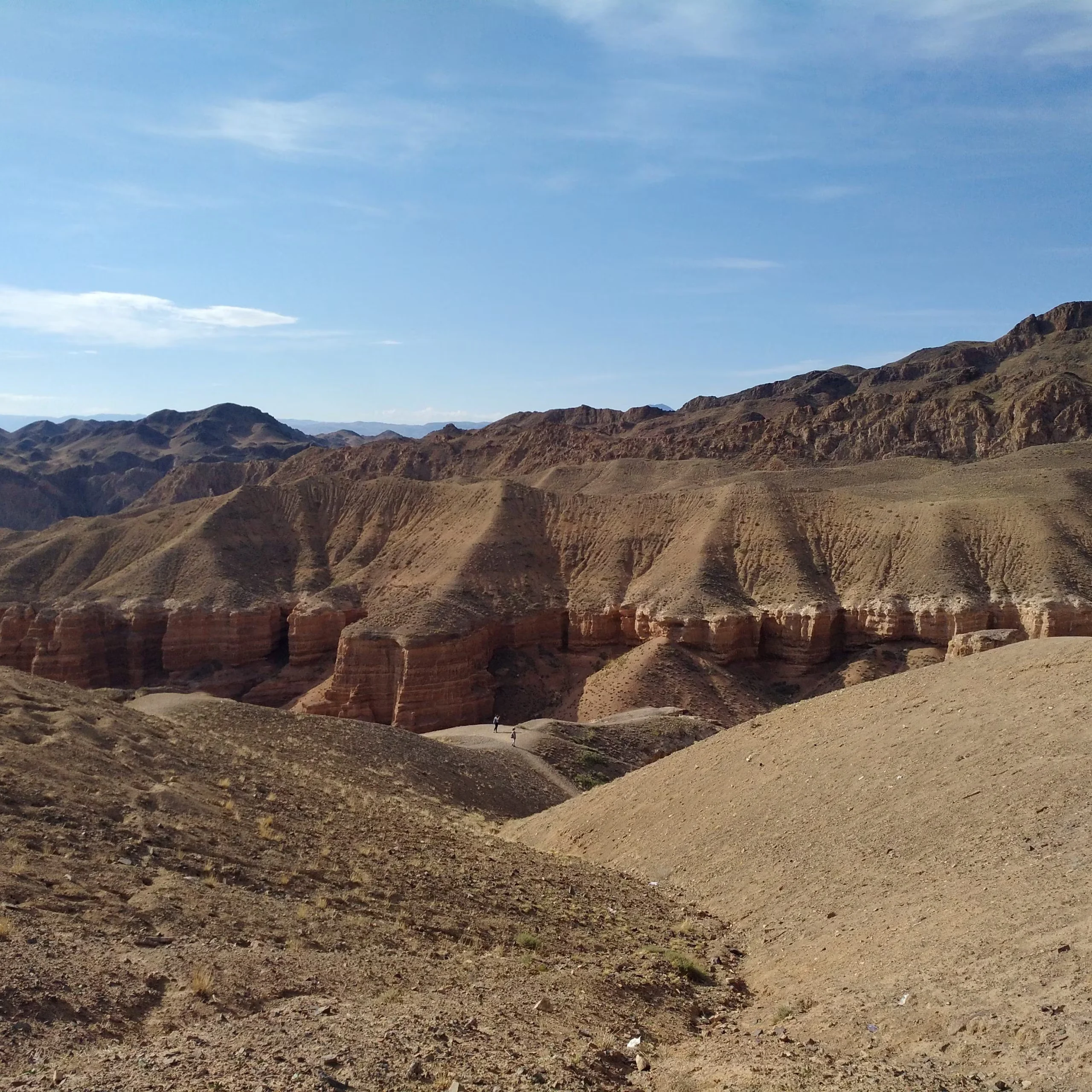
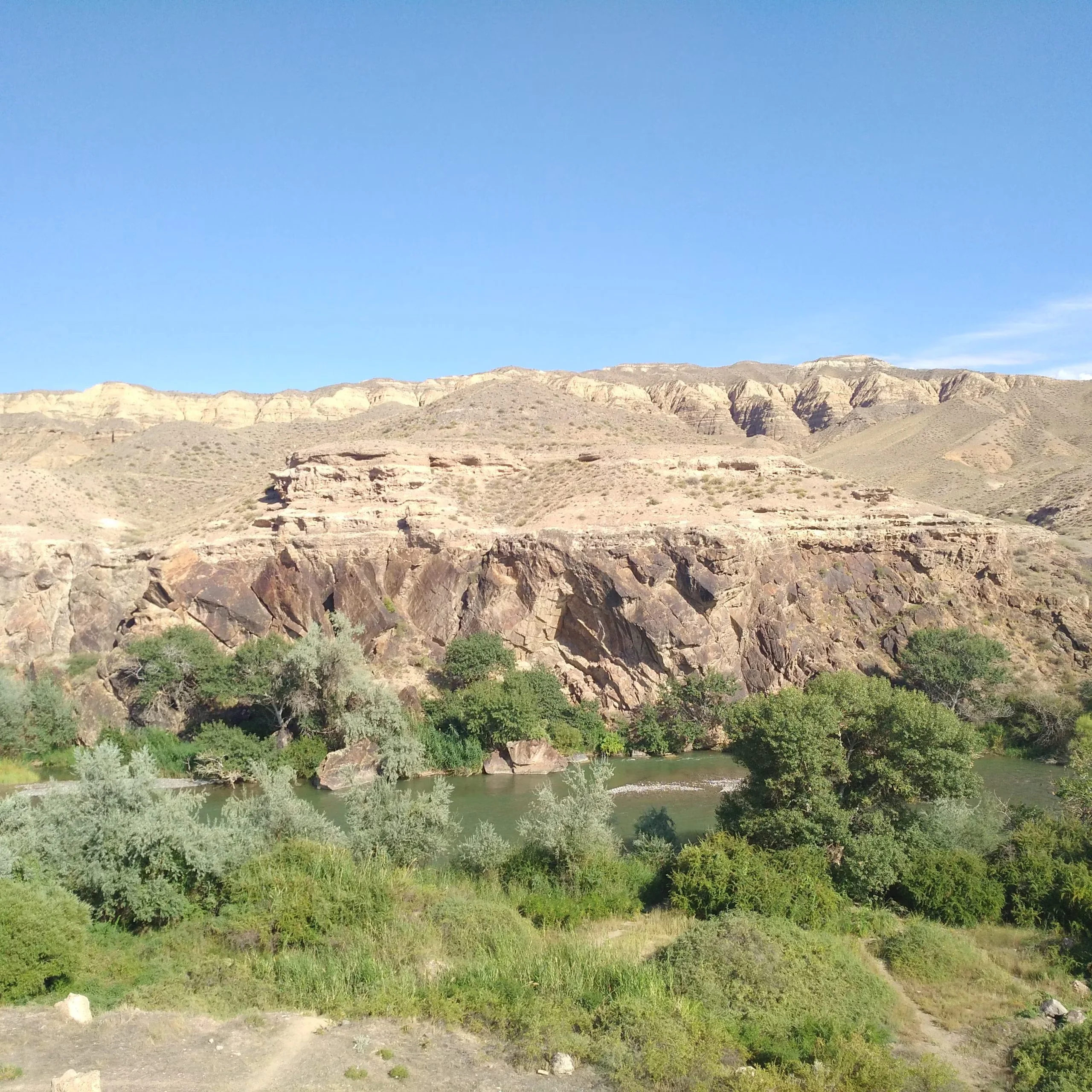
After this stop, we completely change environment by heading toward Charyn Canyon. Extending 154 km along the eponymous river, this canyon is often compared to the American Grand Canyon, although smaller in size, due to its remarkable rock formations. These formations have earned the site the nickname "Valley of Castles." The Charyn River, which winds at the canyon bottom, is lined with willows and poplars, some of which are rare species. This site offers a striking natural spectacle, with its ochre and reddening cliffs, sculpted by erosion over millennia.
Late in the day, we continue our route toward the Tekes Valley, located about 300 km from Almaty. The Tekes River, 438 km long, originates in the Terskey Alatau glaciers and crosses a vast intermountain valley, separating the eastern Tien Shan and Ketmen ranges. This valley, characterized by its alpine meadows and mountainous landscapes, offers a peaceful and preserved setting. The river, fed by snowmelt, is essential for local irrigation and hosts rich biodiversity. We set up our camp in this serene valley, enjoying a convivial dinner and starry night, lulled by the river's murmur.
This second day offers us complete immersion in the diversity of Kazakh landscapes, between mountain lakes, spectacular canyons, and alpine valleys.
- 03
DAY 3: TEKES WATERFALL - BAYANKOL VALLEY
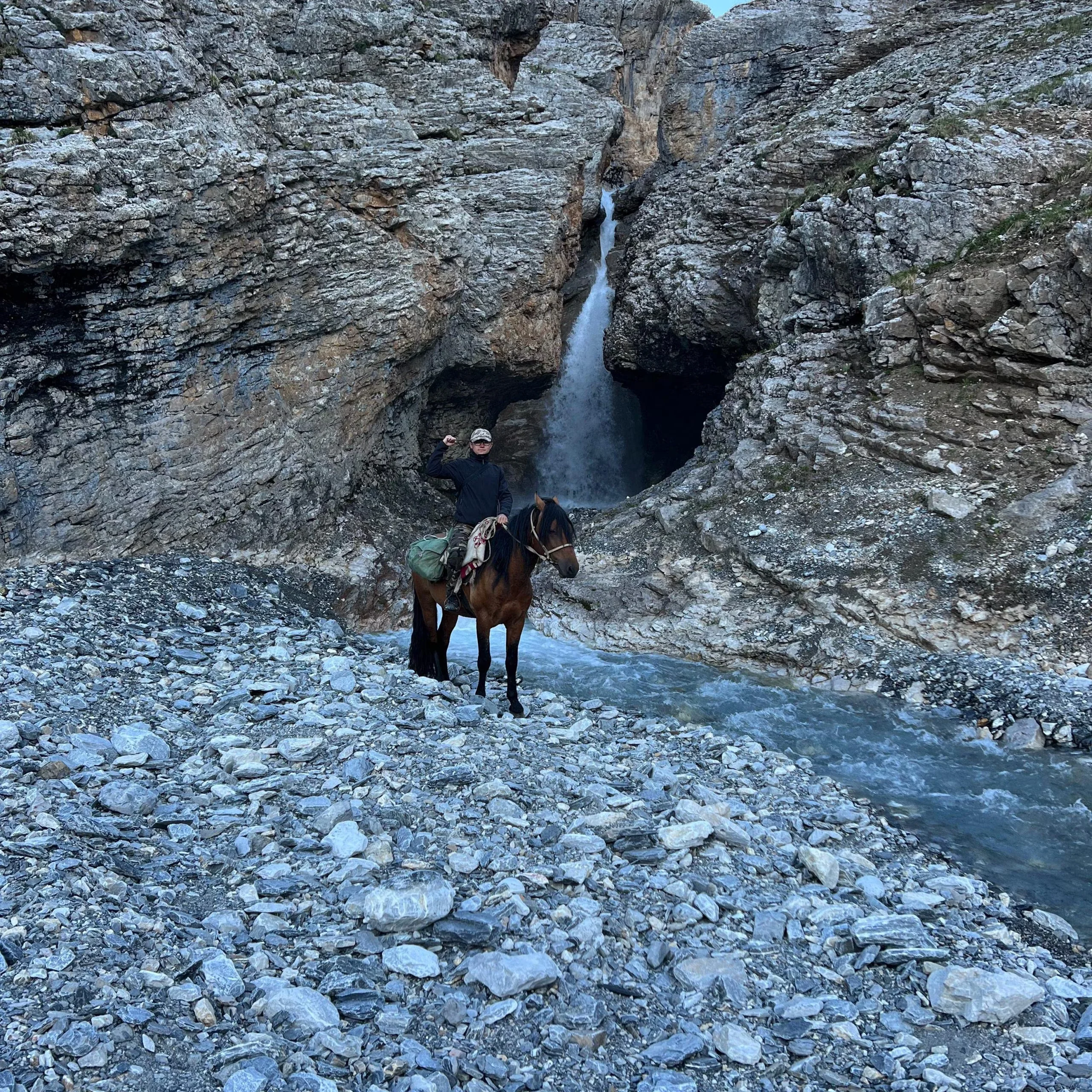
Early in the morning, a short hike leads us to the Tekes Waterfall, nestled in an isolated gorge. Although modest in size, this waterfall impresses with its force and beauty. The water plunges into a rocky basin, forming a captivating swirling dance. Surrounded by steep cliffs and alpine meadows, the waterfall offers a striking natural spectacle.
We get back on the road eastward, toward Bayankol. The last kilometers, on unpaved tracks, testify to the isolation of this border region between Kazakhstan, China, and Kyrgyzstan. The landscapes become increasingly wild, with verdant valleys, snow-capped peaks, and pastures where horses and sheep graze.
Late in the day, we reach the Khan Tengri camp, a haven of peace in the heart of the mountains. This site, named after the famous 7,010-meter summit visible in clear weather, offers an ideal setting to recharge. Surrounded by grandiose landscapes and lulled by the murmur of rivers, we experience true Kazakh hospitality.
- 04
DAY 4: HIKING IN BAYANKOL VALLEY: ZHARKULAK AND THE 6000 PANORAMA
In the heart of Bayankol Valley rises Mount Zharbulak, a spectacular summit offering hikers pristine alpine landscapes, dotted with glacial torrents, verdant pastures, and scattered forests.
From the heights of Zharbulak, you'll have the rare privilege of admiring the 6000 Panorama: a horizon line dominated by several Tian Shan giants, culminating at over 6000 meters. Among them, the legendary Khan Tengri (7010 m) and Peak Pobedy (7439 m), true sentinels of stone and ice that mark the natural border between Kazakhstan, Kyrgyzstan, and China.
Bayankol Valley is not limited to its natural beauty. It also bears traces of its history. On the heights of Mount Zharbulak, at nearly 3000 meters altitude, lies an old now-abandoned mining site. Discovered in 1939, the Zharkulak gold deposit knew several decades of exploitation, and its remains — galleries, cables, buildings — give the landscape a unique atmosphere, where nature and industrial memory intersect.
- 05
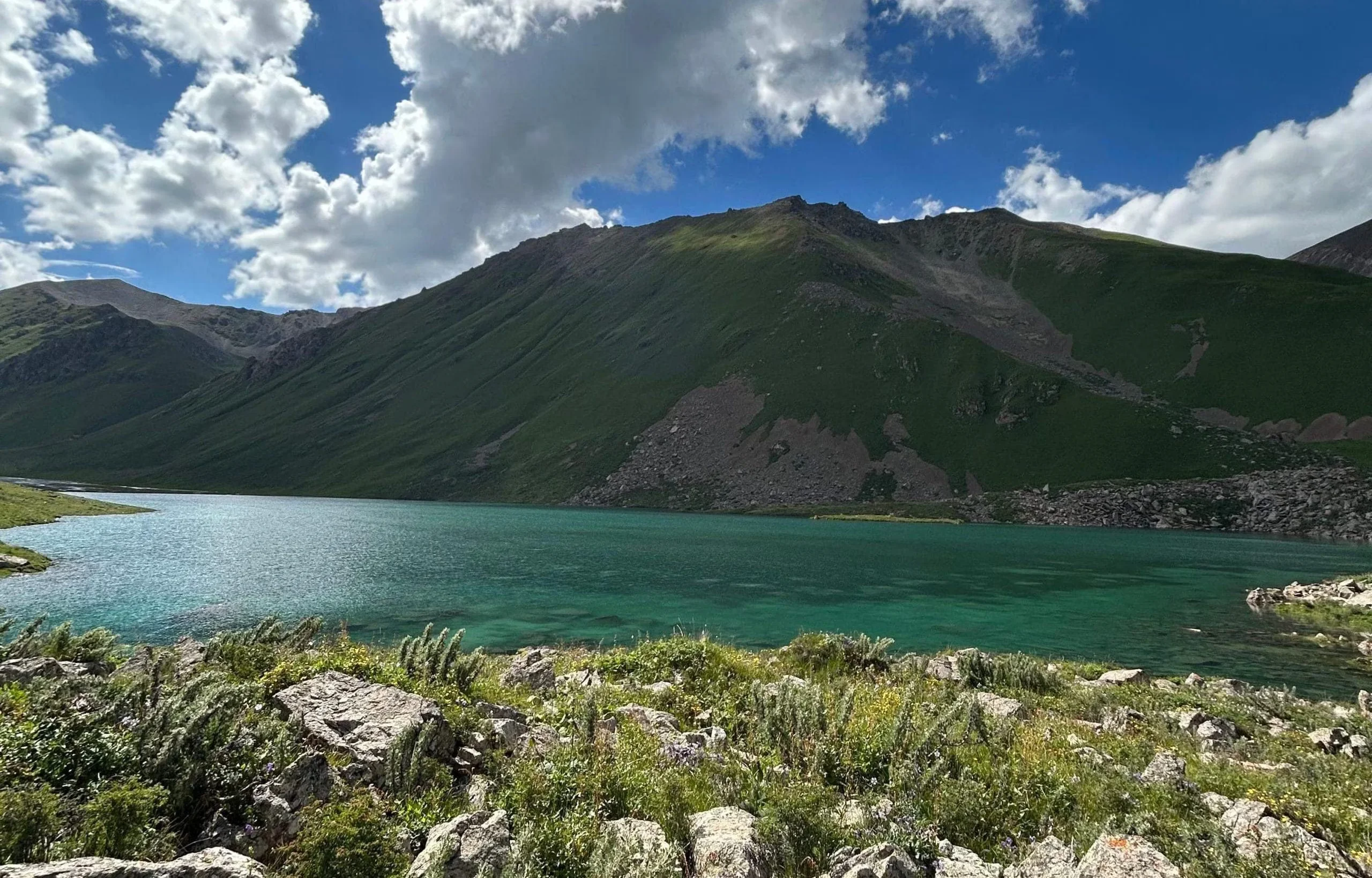
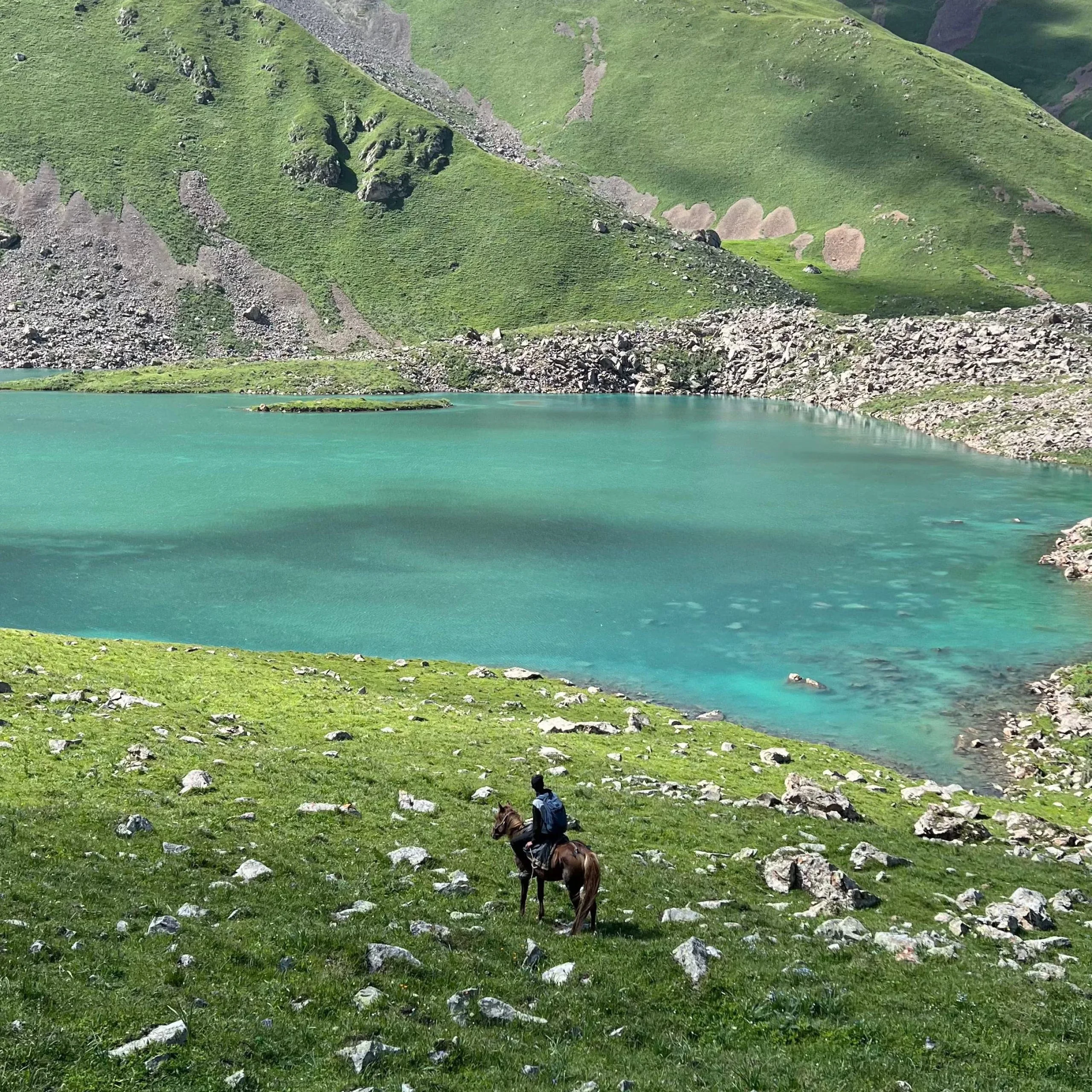
DAY 5: HORSEBACK RIDING TO AKKOL LAKE
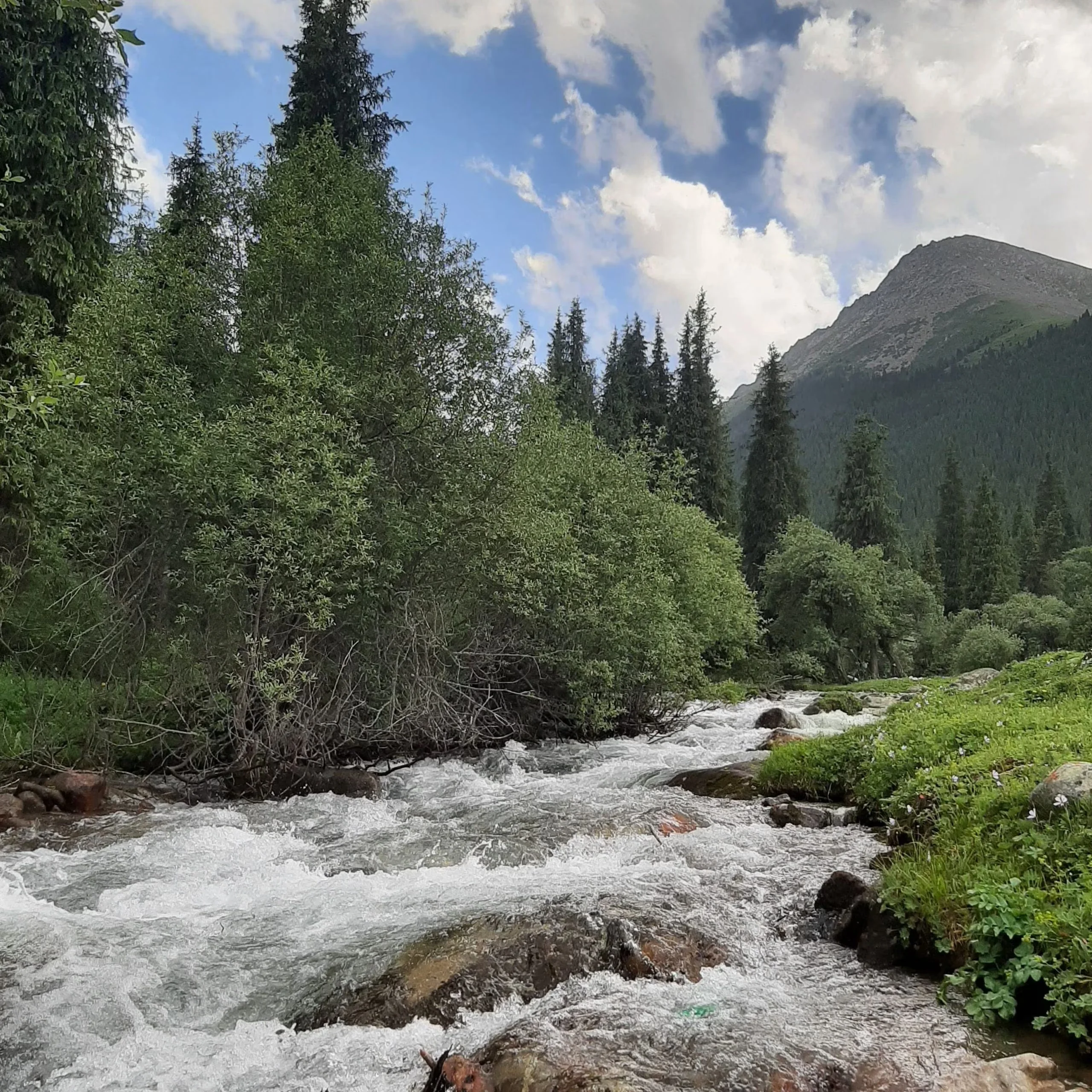
With its crystalline rivers, verdant meadows, and peaceful atmosphere, Bayankol — "prosperous lake" in Kazakh — admirably lives up to its name. We enjoy the idyllic environment offered by our camp.
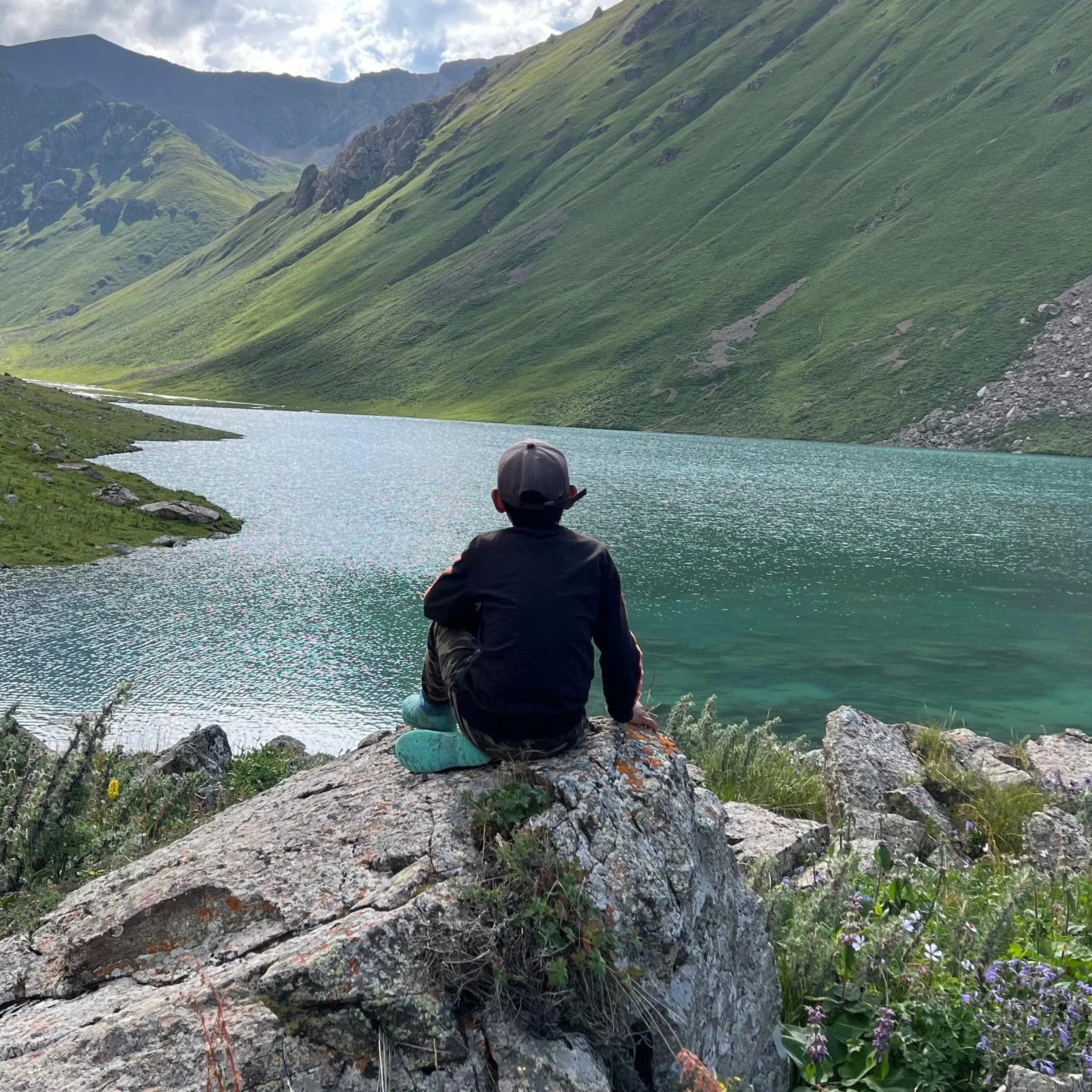
We set off on horseback — a beautiful four-hour equestrian trek — to discover Akkol, the "white lake" in Kazakh. We'll be rewarded for our efforts at day's end with a traditional Sakha sauna. For the rest, walking, reading, or simple contemplation... everyone is free to compose their own tempo. Only the hearty meals, generously prepared by the family running the camp, will punctuate our days, in harmony with nature's whispers.
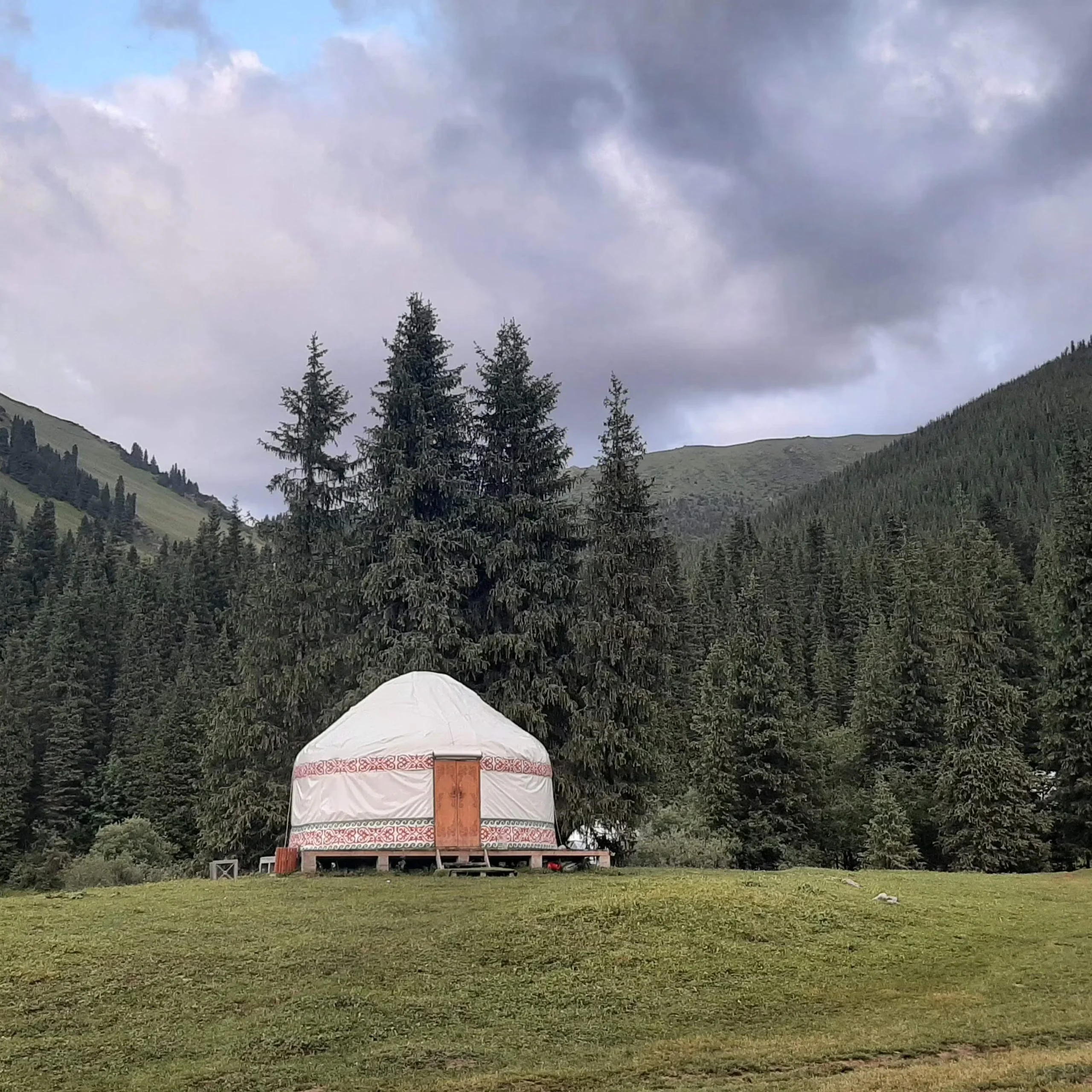
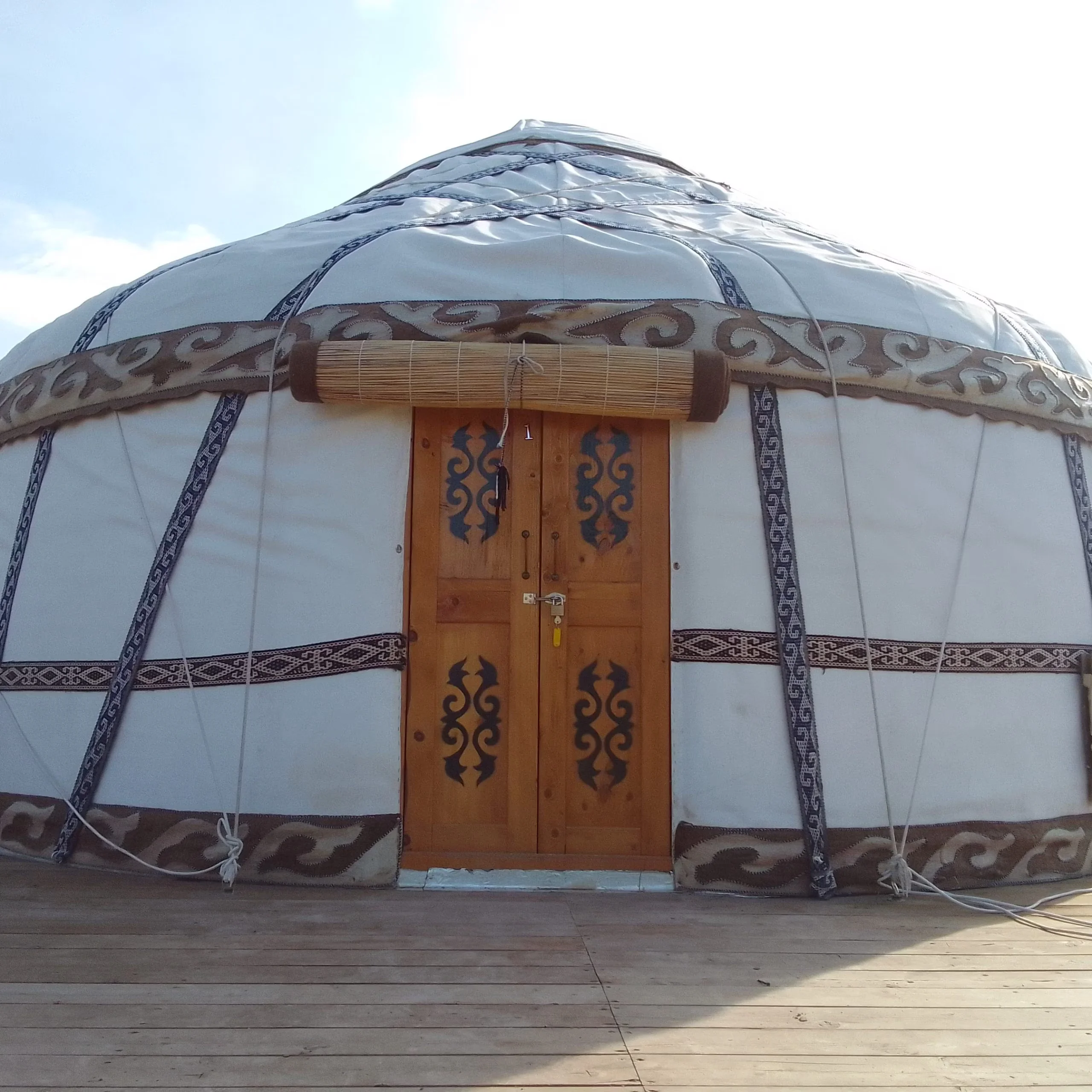
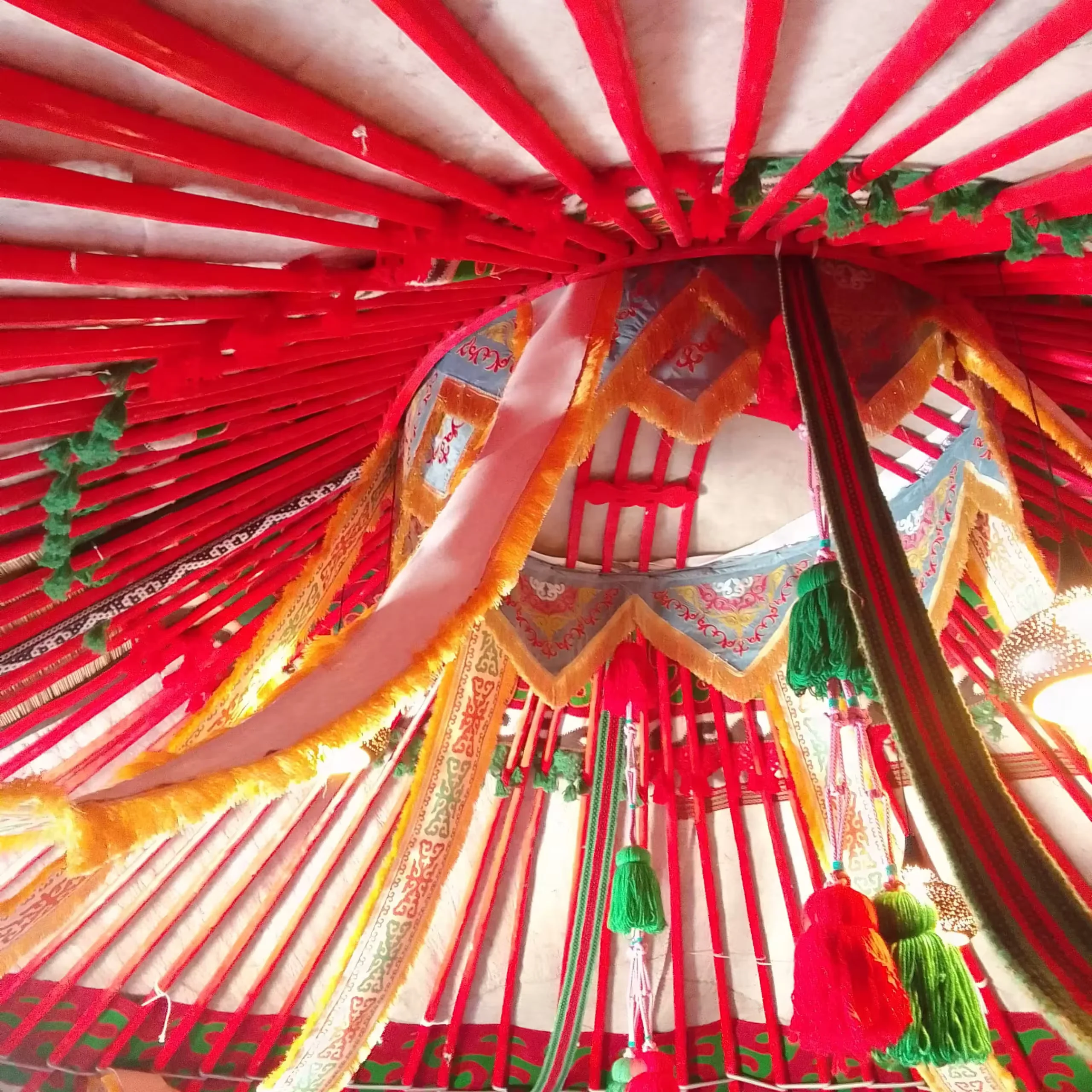
And when night falls, the immense skies will help you understand why Kazakhs call their yurts "thousand-star hotels."
- 06
DAY 6: SHALKODE VALLEY - KETMEN PASS - CHUNDZHA
It's time to bid farewell to Bayankol. We head toward the Shalkode Valley. Extending over 100 kilometers long and about 30 kilometers wide, it is one of the largest "jailau" (high-altitude pastures) of the Kazakh Tian Shan. It's an ideal place to discover the traditional pastoral life of Kazakh shepherds, who pitch their yurts there during the summer season.
We then cross the Ketmen Pass, located at 3,040 meters altitude, which crosses the mountain range of the same name. We reach Chundzha, a village located in the Uighur district. Founded in 1867, the village is now recognized for its hot mineral springs. These are of geothermal origin: groundwater infiltrates deep into the soil, where it's heated by geothermal activity before rising to the surface through faults and cracks in the Earth's crust. There are about 140 of these springs in the region, with temperatures varying between 37 and 50°C. Chundzha's thermal waters are renowned for their therapeutic properties, rich in minerals beneficial to health. We'll spend the evening testing them!
- 07
DAY 7: ZHARKENT
We drive toward Zharkent, the last Kazakh city before the Chinese border. Its mosque, built in 1895 without using a single nail, is almost unique in Central Asia! It was constructed between 1887 and 1892 under the direction of Chinese architect Hon Piquet, and constitutes a remarkable architectural and historical masterpiece. Financed by the local Uighur community, its architecture testifies to a unique fusion of Uighur and Chinese styles, integrating decorative and structural elements characteristic of these two cultures. For example, the mosque features pagoda roofs, typical of Chinese architecture, while its ornamental motifs evoke Uighur traditions. Today, the mosque houses a museum dedicated to the history and culture of the region.
Near the mosque stands the Orthodox church dedicated to the prophet Elijah, built in 1892. This wooden church, built on a brick and lime foundation, is a typical example of Russian religious architecture of that era. It's characterized by a cross-shaped structure with five domes, whose crosses are covered in bronze.
After visiting these two beauties, we head to Basshi village, where we'll spend the night, before discovering Altyn Emel National Park the next day.
- 08
DAY 8: ALTYN EMEL NATIONAL PARK - AKTAU MOUNTAINS
We enter Altyn Emel National Park. This true natural jewel of Kazakhstan extends over more than 4,600 km² and offers remarkable biodiversity as well as impressive landscapes, ranging from arid mountains to vast desert plains. The park is indeed a refuge for wild species such as goitered gazelles, Przewalski's horses, wild donkeys, as well as numerous raptors and vultures.
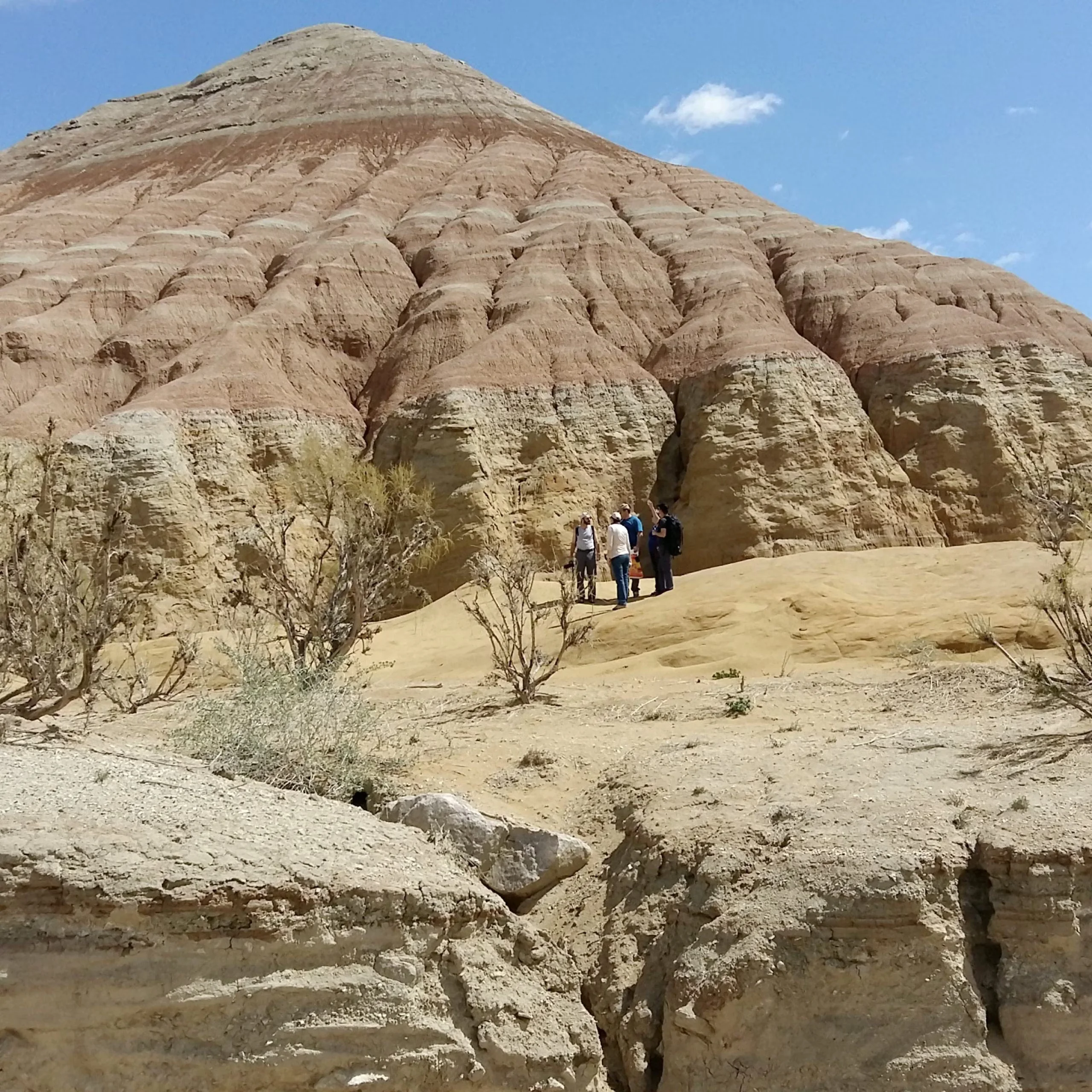
Our day begins with a walk on the site of the colorful mountains of Mount Aktau, remnants of an ancient ocean floor. The sediment layers, mainly composed of clay and sandstone, reveal shades ranging from white to red, thus offering a spectacular landscape.
We continue with the 700-year-old willow, a majestic tree classified as a natural monument. Surrounded by legends, notably one of Genghis Khan's passage, it's considered sacred by the inhabitants. Standing 20 meters tall and several centuries old, it grows thanks to a unique microclimate created by underground hot springs. It offers a striking contrast with the park's arid landscapes.
- 09
DAY 9: ALTYN EMEL SINGING DUNE - ALMATY
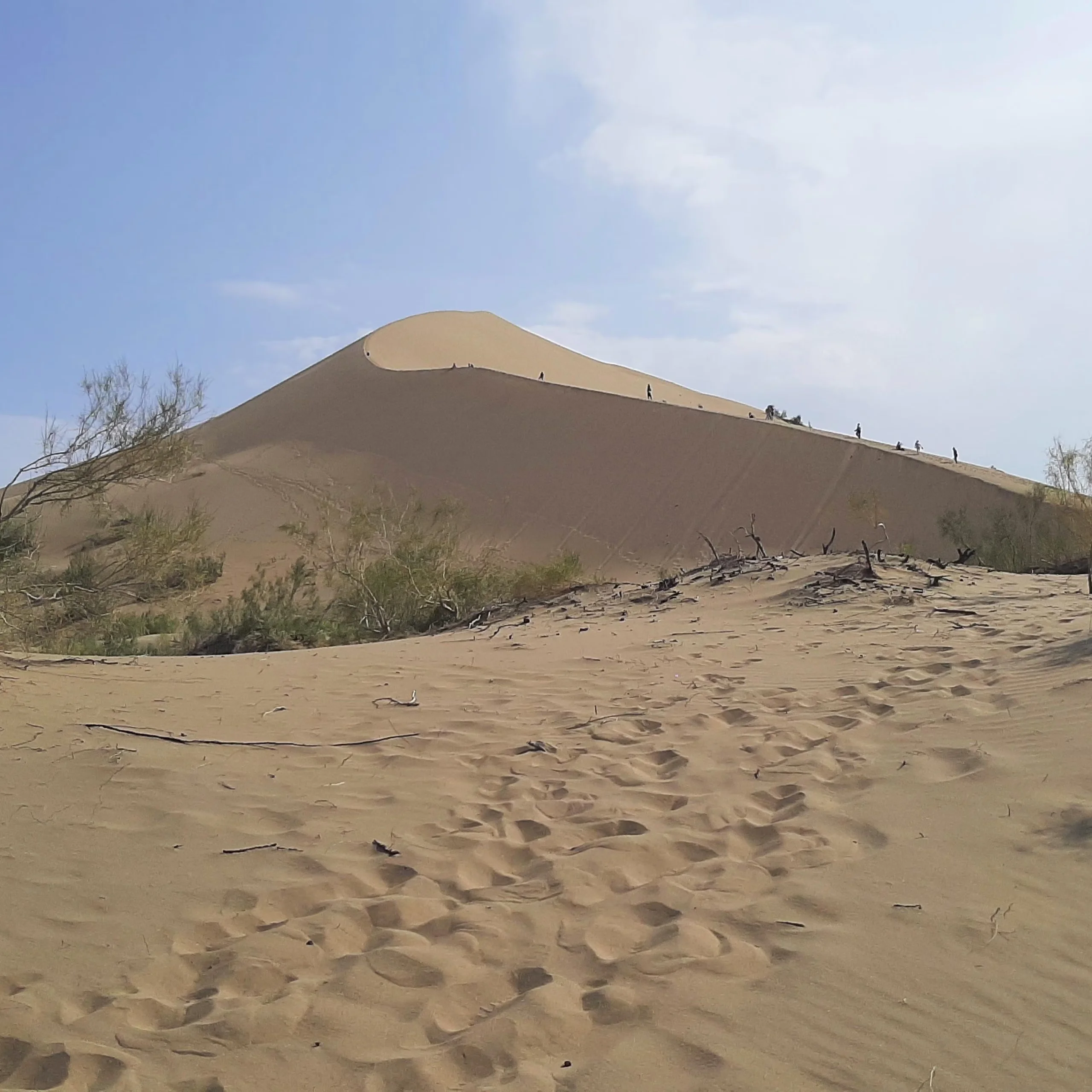
Our last stop before returning to Almaty is one of Altyn Emel's most fascinating attractions: the famous "Singing Dune," known as Aigai-Kum ("screaming sand" in Kazakh).
This imposing sand dune, 3 km long and 150 m high, produces in dry weather a sound resembling an organ's hum or an airplane's roar, a phenomenon due to the friction of sand grains against each other. This rare natural phenomenon has captivated travelers for centuries.
After our ascent of the dune, it's time to get back on the road to return to civilization: Almaty awaits us!