Visiting Central Asia without exploring its bazaars means missing the soul of this region. These bustling markets are not just places of exchange: they concentrate centuries of history, traditions and humanity. True cultural crossroads of the Silk Road, they are steeped in spices, ancient gestures and multiple languages. Whether you're in Kazakhstan, Kyrgyzstan, Uzbekistan or Tajikistan, don't forget to make a detour to the bazaar!
Here are five iconic markets to immerse yourself in this vibrant and warm Central Asia!
KAZAKHSTAN - Almaty: Kok Bazaar
The beating heart of Almaty
Located in the center of Almaty, the Kok Bazaar — also known by its Russian name Zelyony Bazar ("green market") — comes alive early in the morning. From late spring to early autumn, the stalls are adorned with a thousand colors: red in all its shades for strawberries and tomatoes, orange for apricots, pink for raspberries, black for blackberries... the sweet smell of ripe fruit fills the air. Less appetizing for some more sensitive travelers, but just as impressive: in the main hall, quarters of meat hang from steel hooks, a raw but controlled spectacle, punctuated by butchers' calls and jokes.
Not to be missed:
- Traditional Kazakh dairy products: koumiss (fermented mare's milk), kurt (dried cheese), irimshik (cottage cheese, sometimes caramelized)
- Korean specialties (heritage of an old diaspora): kimchi, spicy salads
- A coffee break on the mezzanine to admire the market frenzy from above (in the main hall, at Bowler Coffee Roasters)
- The "real" bazaar frequented by locals (cross the main hall, pass behind the meat stalls, continue straight until you reach another hall and go down one level)
When to go? Early in the morning (except Monday, closing day), when the fruits are freshest and the aisles still quiet.
KYRGYZSTAN - Bishkek: Osh Bazaar
The organized chaos of an unfiltered popular market
In the west of the Kyrgyz capital, Osh Bazaar is a real labyrinth: as soon as you pass the entrance, visitors are caught up in a tangle of alleys, vendors' shouts, smells of herbs, grilled meat and warm bread. This is not a postcard market, but an authentic place of life, where you discover everyday Kyrgyz life without staging. The air is fragrant with fresh coriander, grilled meat and warm bread. At Osh Bazaar, you'll meet grandmothers in flowered scarves who came to sell vegetables from their garden, dynamic young merchants who accept QR code payments, and children helping to run the family stall. It's a faithful image of a Kyrgyzstan in motion, between rural tradition and urban modernity.
From the first hours of the day, the bazaar comes alive and attracts producers, merchants and customers. Vendors' shouts compete with cart horns. It's a sensory spectacle in its own right, where Kyrgyz traditions are expressed at every corner.
Not to be missed:
- The textile and craft corner: you'll find felt carpets (shyrdak), traditional leather boots and kalpaks, those white hats emblematic of Kyrgyzstan.
- The street food section: taste lagman (stir-fried noodles), steamed manty or crispy samsas cooked in open tandoors, right on the sidewalk.
- Traditional remedies and herbal teas: sold in bulk by herbalists, alongside natural products, artisanal soap or mountain herb balms.
UZBEKISTAN – Tashkent: Chorsu Bazaar
A turquoise dome and mountains of spices
Under its immense turquoise mosaic dome, Chorsu Bazaar is an emblem of Tashkent. The architecture recalls a cotton flower, echoing Uzbekistan's textile history. Inside, stalls overflow with colorful spices, dried fruits, pyramids of vegetables and... sheep tail fat, essential for a real plov.
Not to be missed:
- Dried fruits (apricots, grapes, figs) and artisanal confections
- Jewelry, ikat fabrics and traditional scarves
- Outside, a local "food court" hidden under the stairs, very popular with locals: steaming plov, shashliks (skewers), fragrant shurpa to eat on site or take away
Photo tip: Go upstairs to capture the hypnotic spiral of the market from above.
UZBEKISTAN – Samarkand: Siyob Bazaar
An elegant market steps away from Bibi-Khanym
Just behind the majestic Bibi-Khanym mosque, Siyob Bazaar combines tradition, crafts and bright colors. It's the ideal place to find authentic souvenirs and local products: spices, Samarkand bread, blue pottery, embroidered tunics or shimmering silk.
Not to be missed:
- Bargaining with humor (it's expected, especially if you hesitate for a long time)
- Tasting freshly squeezed pomegranate juice
- Bringing back the famous round Samarkand bread, engraved with geometric patterns
Ideal for: stocking up on gifts that are beautiful, delicious and full of meaning.
TAJIKISTAN - Dushanbe: Mehrgon Bazaar
A large modern bazaar with a warm atmosphere
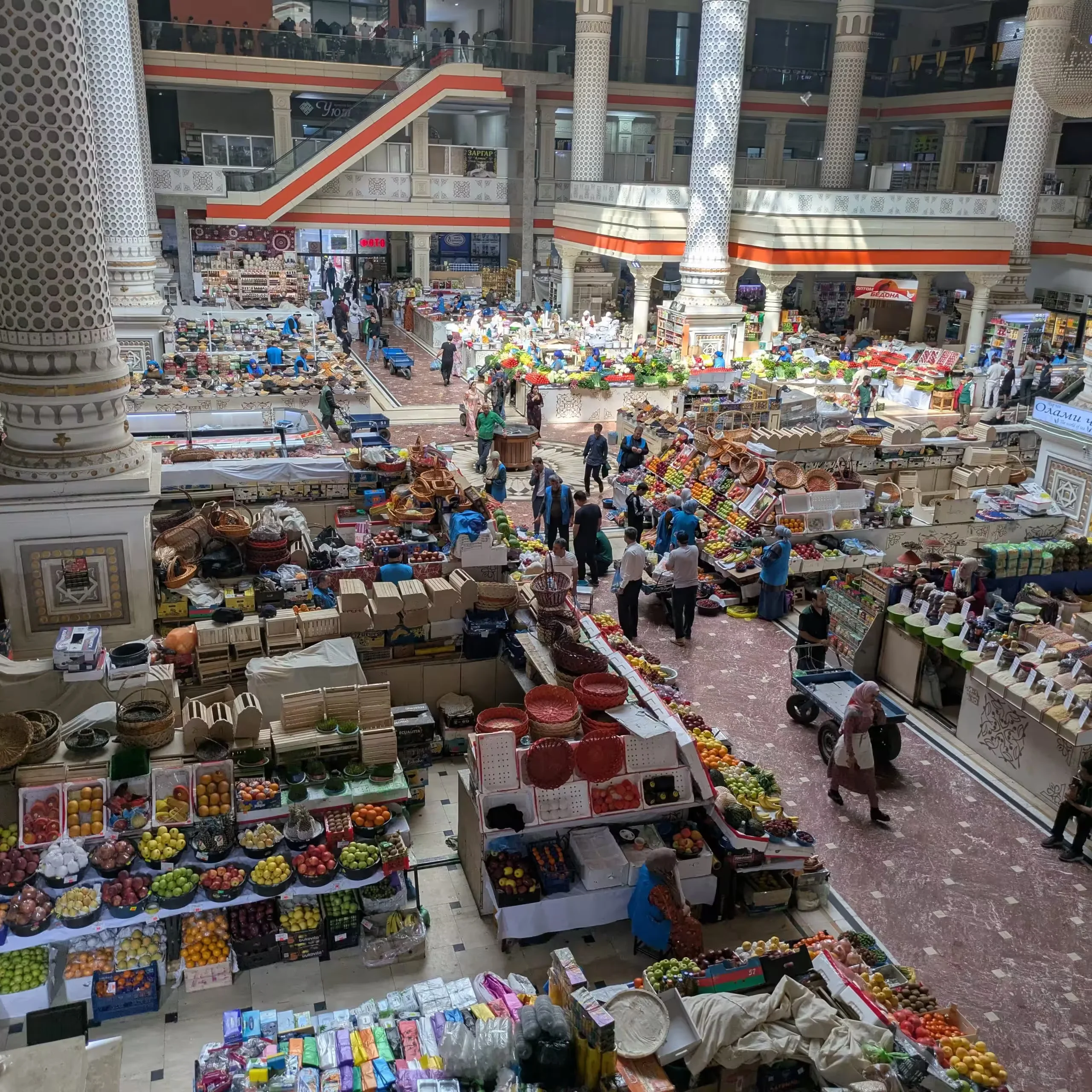
Replacing the old Barakat market, Mehrgon Bazaar is now the largest in Dushanbe. Modern but full of charm, it spreads over several floors, between mountains of dried apricots, stalls of saffron rice and fragrant teas. Tajik merchants, always welcoming, gladly offer a tasting.
Not to be missed:
- Going up to the 3rd floor for an overview of the market bustle
- Finding the little souvenir shop (on the 3rd floor): painted cups, Tajik tubeteika (traditional hats), semi-precious stones, and many other small items
- Exploring the deep alleys (taking the door opposite the entrance, and diving into the maze of covered alleys): traditional fabrics, everyday utensils, seasonal fruits and vegetables
Recommended break: A short walk away, the Toqi Teahouse welcomes you with green tea, osh (plov) and a relaxing setting.
Why you absolutely must visit a bazaar in Central Asia?
Much more than a place to shop, the bazaar is a living theater where family stories, ancestral recipes and gestures transmitted through generations intersect. This is where the pulse of Central Asian societies beats, in a delicious mix of noise, smells, smiles and traditions.
Bazaars are:
- An authentic immersion in local life, a way to meet inhabitants in their daily life and interact with them
- An unforgettable sensory experience
- Direct support for the economy of families and artisans
Our practical tips for a successful visit
- When to go? Early in the morning (for a calm atmosphere)
- Recommended attire: Respectful (more or less covering depending on the country!), comfortable, and adapted to crowds
- Communication: A smile and a few words in the local language, good humor!
- Photos: Always ask permission before photographing a person
- Payment: Bring local currency in small denominations
- Bargaining: Don't forget to bargain with a smile, it's a game that's part of the local culture!